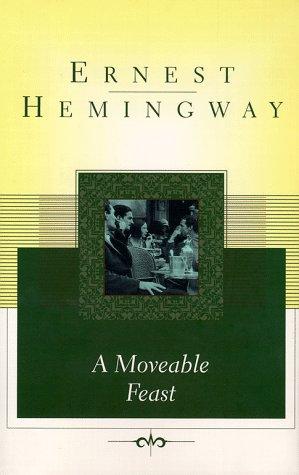
Talk to A Moveable Feast like its author wrote you back.
Get the ideas that fit your life — not generic summaries.
- Chat with the book
- Audiobook-style main ideas
- Adapts to your life and goals
- Helps you take action
What it argues
A Moveable Feast is Hemingway's posthumously published account of his years in Paris during the 1920s, when he and his first wife Hadley lived cheaply in Montparnasse while he apprenticed himself to the work of becoming a writer. Assembled from notebooks written in the late 1950s, the book was edited and published by his fourth wife Mary Hemingway in 1964, three years after his death. A restored edition based on closer fidelity to the manuscripts appeared in 2009.
The book is organized as a series of sketches rather than a continuous narrative. Hemingway describes working in cafes, attending the horse races at Auteuil to supplement their income, fishing in the streams of Austria and Spain, and the daily discipline of trying to write true sentences. The Paris chapters are suffused with a particular quality of memory — sharpened by nostalgia and somewhat idealized — that gives the book its melancholy undertone. He is writing about a time he clearly considers the happiest of his life, and he knows by the time he writes it that the happiness was followed by destruction.
What it gets right
- 1.
Poverty and constraint can be generative. Hemingway's years in Paris were lean, and he argues — perhaps too comfortably in retrospect — that hunger and limitation sharpened his attention.
- 2.
The apprenticeship model of writing: Hemingway worked at craft deliberately, learning from Stein, from Pound, from Cézanne's paintings, from the specific disciplines of journalism, and the book is a record of that learning.
- 3.
A true sentence. Hemingway's famous prescription — write the truest sentence you know — is presented not as a finished theory but as a practical daily tool for getting past the blank page.
What it covers
Who wrote it
Ernest Hemingway (1899–1961) was an American novelist and short story writer whose spare prose style influenced twentieth-century fiction as profoundly as any single writer. He worked as a journalist before and between his major novels, including The Sun Also Rises, A Farewell to Arms, and For Whom the Bell Tolls. He received the Nobel Prize in Literature in 1954. He spent his final years in Cuba and Idaho, where he took his own life in 1961. A Moveable Feast was published three years after his death, compiled from notebooks he kept in the late 1950s.
