Talk to Anatomy of the Spirit like its author wrote you back.
Get the ideas that fit your life — not generic summaries.
- Chat with the book
- Audiobook-style main ideas
- Adapts to your life and goals
- Helps you take action
Anatomy of the Spirit, in detail
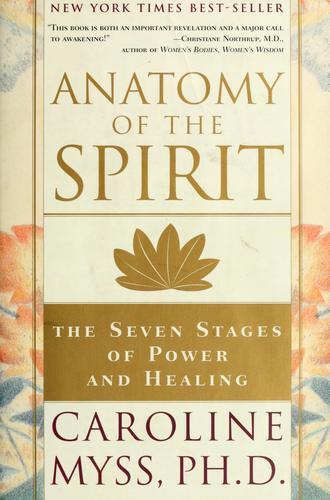
Anatomy of the Spirit is Caroline Myss's attempt to synthesize three major spiritual traditions — the Hindu chakra system, the Christian sacraments, and the Kabbalistic Tree of Life — into a unified model of human energy anatomy. Myss, trained as a theologian and known for work in medical intuition, argues that these three systems, originating in different cultures and centuries, describe the same underlying structure: the way human beings organize power, consciousness, and meaning in the body.
The book's central claim is that biography becomes biology. How we invest our energy — in grief, resentment, fear, love, or meaning — shapes the physical health of the corresponding energy centers, which Myss maps onto specific body systems and disease patterns. The first chakra, governing tribe and belonging, corresponds to the legs, bones, and immune system. The fourth chakra, governing love and grief, corresponds to the heart and lungs. Chronic emotional conflicts, particularly those involving power — feeling controlled, betrayed, or powerless — generate the energetic depletion that eventually produces physical illness.
Myss writes with real authority about the patterns she observed during her years of intuitive diagnosis work with physician C. Norman Shealy. The case studies are the book's strongest material: specific, often surprising descriptions of how unresolved emotional patterns manifested as distinct physical conditions. She is particularly sharp on what she calls woundology, the tendency to organize identity around illness or trauma in ways that paradoxically prevent healing.
The book asks for a particular kind of receptivity. Its framework is not testable in the scientific sense, and readers who approach it looking for empirical evidence will be frustrated. It functions more as a contemplative map — a way of asking different questions about the relationship between what you believe, how you live, and what your body expresses. For readers already drawn to integrative or spiritual perspectives on health, it is richly detailed and practically oriented. For skeptics, the synthesis of traditions may feel more like poetic coincidence than genuine discovery.
The big ideas
- 1.
Biography becomes biology: the emotional and psychological patterns of a person's life leave specific traces in the physical body through corresponding energy centers.
- 2.
The Hindu chakra system, Christian sacraments, and Kabbalistic sefirot are parallel maps of the same energy anatomy, each describing how power and consciousness move through the human system.
- 3.
Each of the seven energy centers corresponds to specific emotional themes, life challenges, and physical organ systems — imbalances in one tend to manifest as illness in the other.
