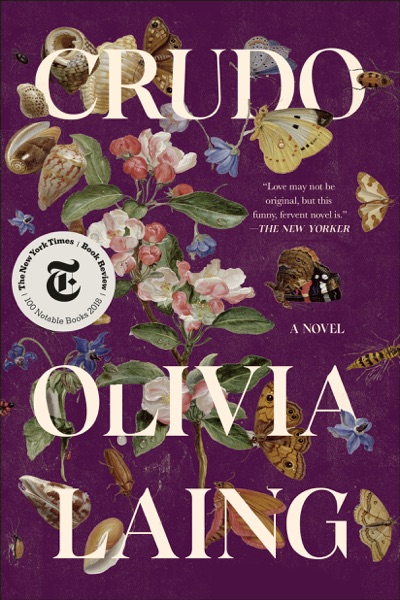
Talk to Crudo like its author wrote you back.
Get the ideas that fit your life — not generic summaries.
- Chat with the book
- Audiobook-style main ideas
- Adapts to your life and goals
- Helps you take action
Crudo, in detail
Crudo is a novel written in real time, in the summer of 2017, about a woman named Kathy — who is also Kathy Acker — getting married. The novel was drafted in seven weeks during a period when Brexit was ongoing, Trump had just taken office, and the news cycle was an unceasing disaster. Laing made a formal choice to write the book as the summer unfolded, not revising the political context or the narrator's anxious responses to it, and the result is a book that feels genuinely uncontrolled — which is either its greatest achievement or its most off-putting quality, depending on what you want from fiction.
Kathy — simultaneously a forty-year-old writer based in London and the ghost of Kathy Acker, the American avant-garde novelist who died in 1997 — is approaching her own wedding with ambivalence and terror that have nothing to do with the specific man she's marrying and everything to do with what commitment means for a person whose identity is built on freedom. The wedding plot, such as it is, is thin. What the novel is actually doing is tracking a consciousness moving through a moment of global anxiety: checking Twitter, watching politicians lie, reading headlines about hurricanes and nuclear brinksmanship, trying to figure out how to be present in a world that keeps demanding your attention and then rewarding it with horror.
Laing's prose borrows from Acker's own cut-up, collage style — sentences arrive sideways, fragments of news interrupt intimacy, the first and third person blur. The novel is short, dense, and formally unusual enough that it will alienate readers who want conventional narrative. But for those who've read The Lonely City or To the River — Laing's earlier nonfiction works — it is of a piece with her project: an exploration of what it means to live in a body, in time, in a political world that does not stop for your private life.
This is not a novel for everyone. It demands a tolerance for high anxiety rendered on the page without resolution, a fondness for stream-of-consciousness prose that doesn't always resolve, and some patience with its own self-absorption. But as a document of a specific cultural moment — 2017, when many people felt the bottom had dropped out of normal life — it is oddly precise.
The big ideas
- 1.
The novel's central formal bet is that unrevised real-time writing can capture something about anxiety that polished retrospective narration cannot.
- 2.
Kathy Acker's ghost haunts the novel as a version of female freedom — transgressive, self-invented, ultimately mortal — that the narrator is measuring herself against.
- 3.
Marriage in the novel is not a romantic resolution but a philosophical problem: what does commitment mean for a self that has defined itself by refusal of constraint?
