Talk to Daring Greatly like its author wrote you back.
Get the ideas that fit your life — not generic summaries.
- Chat with the book
- Audiobook-style main ideas
- Adapts to your life and goals
- Helps you take action
What it argues
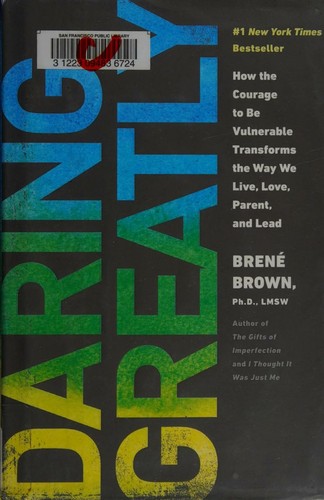
Daring Greatly is Brené Brown's argument, drawn from twelve years of qualitative research on shame and vulnerability, that the willingness to show up without guarantees — to be seen, to risk failure, to remain open in the presence of uncertainty — is not weakness but the foundation of courage, connection, and meaningful achievement. The title comes from Theodore Roosevelt's "Man in the Arena" speech, and Brown's thesis is that the critics in the cheap seats — the voice of shame that tells you you're not good enough, not smart enough, not successful enough — are the primary obstacle to the kind of daring that produces a full life.
The first half of the book is a research-grounded account of vulnerability and shame. Brown makes a careful distinction between the two: shame is the belief that you are fundamentally flawed ("I am bad"), while guilt is the belief that you have done something bad ("I did something bad"). Guilt, she argues, is a healthy response to transgression and motivates repair. Shame produces either withdrawal and hiding or aggression and blame — it is rarely productive. The culture of scarcity she describes — the sense that there is never enough success, time, love, or belonging — is shame's natural environment.
What it gets right
- 1.
Vulnerability is not weakness but the most accurate measure of courage: showing up without certainty of outcome is the only way to create genuine connection, innovation, and belonging.
- 2.
Shame and guilt are different: shame is 'I am bad' (toxic, produces withdrawal or aggression); guilt is 'I did something bad' (healthy, motivates repair). Most shame criticism in culture conflates them.
- 3.
Scarcity — the belief that we are never enough — is the cultural context in which shame thrives; wholehearted people develop sufficiency not through achievement but through changing their fundamental relationship with self-worth.
What it covers
Who wrote it
Brené Brown is a research professor at the University of Houston, where she holds the Huffington Foundation Endowed Chair at the Graduate College of Social Work. She spent over a decade studying vulnerability, shame, courage, and empathy, and her 2010 TED Talk on the power of vulnerability is one of the most-viewed TED Talks in history. Her other books include The Gifts of Imperfection, Braving the Wilderness, Dare to Lead, and Atlas of the Heart. She is the host of the Unlocking Us podcast and a sought-after speaker for organizations on leadership and culture. She holds a PhD in social work from the University of Houston.
