Talk to Gift from the Sea like its author wrote you back.
Get the ideas that fit your life — not generic summaries.
- Chat with the book
- Audiobook-style main ideas
- Adapts to your life and goals
- Helps you take action
Gift from the Sea, in detail
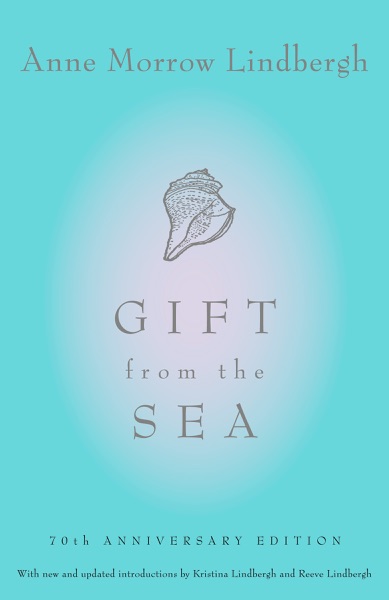
Gift from the Sea is a short meditation written during a solo vacation on the Florida Gulf Coast in 1955. Anne Morrow Lindbergh — aviator, writer, wife of Charles Lindbergh, and mother of five — used the occasion to think carefully about what women need to sustain an inner life within the demands of marriage, family, work, and social obligation. The result is not a polemic or a manifesto but something closer to a sustained piece of philosophical attention, organized around a series of shells she picks up on the beach.
Each shell becomes a metaphor. The channeled whelk, with its single elegant form, represents the solitude and simplicity she argues women — and by extension any person caught in centrifugal modern life — must periodically reclaim. The moon shell, complete and isolated, prompts reflection on the discipline of solitude: not loneliness but intentional withdrawal to reconnect with oneself. The oyster shell, worn and encrusted, stands for the fully built-out life of middle age, rich in relationships and complexity but sometimes closed to the pure experience of the present.
The book's central tension is between the "outward pull" of obligations and the "inward pull" toward creative and spiritual life. Lindbergh is not interested in resolving this tension but in managing it consciously. She argues against accumulation — of possessions, commitments, relationships that have calcified into obligation. She is for simplification not as aesthetic preference but as psychological necessity. The middle section of the book is specifically about the nature of love in long-term relationships: how the early intensity cannot be sustained and should not be expected to be, how good marriages go through distinct phases, how the goal is not permanent romantic unity but a "pure relationship" — freely chosen, with space for two whole people.
Written in 1955, the book reflects its era in some ways. The specifically gendered framing, the assumption of heterosexual marriage, the upper-middle-class domestic context — all are dated. But the core observations about distraction, overcommitment, and the difficulty of finding quiet in modern life have, if anything, intensified. Lindbergh's prose is clear and carefully made. Gift from the Sea is short enough to read in an afternoon and dense enough to return to.
The big ideas
- 1.
Solitude is not isolation but a necessary discipline for maintaining an inner life — a practice of periodic withdrawal from obligations and relationships to reconnect with oneself.
- 2.
Simplification is a psychological act, not an aesthetic one. Accumulating more obligations, possessions, and relationships beyond what can be engaged with fully produces inner fragmentation.
- 3.
Relationships go through phases and should not be forced to remain in the early, intense stage. A mature relationship depends on two whole people choosing each other freely, not on merger.
