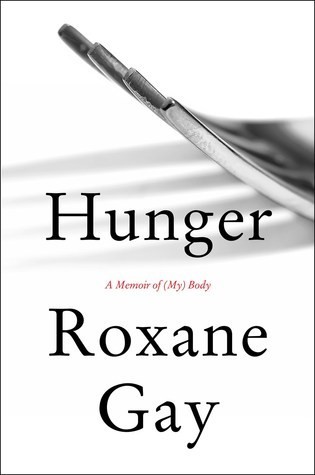
Talk to Hunger: A Memoir of (My) Body like its author wrote you back.
Get the ideas that fit your life — not generic summaries.
- Chat with the book
- Audiobook-style main ideas
- Adapts to your life and goals
- Helps you take action
Hunger: A Memoir of (My) Body, in detail
Hunger is Roxane Gay's memoir of her body — how it came to be the way it is, what she has thought about it, and what it means to live in a body that the world reads as a problem to be solved. The book centers on a gang rape Gay experienced at age twelve, perpetrated by a boy she trusted and his friends, and how that event shaped her relationship with her body in the years after. She describes making herself larger — eating, gaining weight — as a way of making herself less vulnerable, less visible to sexual predators, less the kind of body that invites the kind of attention that preceded the assault. The reasoning was not fully conscious at the time, but the pattern was real.
Gay is direct about what followed: decades of complicated eating, a body that drew comment and cruelty from strangers, medical experiences in which her weight was treated as the primary fact about her regardless of what she had come in for, and the specific exhaustion of existing in public when the culture is continuously explicit that a body like hers is a failure. She does not claim to have resolved these things. The memoir is not a recovery narrative. It is a document of ongoing experience written from inside it.
The book is important partly for what it refuses. It refuses to offer lessons for people who don't share Gay's experience. It refuses to suggest that understanding the origin of her eating changes the pattern. It refuses to imply that self-acceptance is simple or always available or that the failure to achieve it is a further moral failure. It is also explicitly not a diet memoir, not a self-improvement manifesto, and not a case for or against any particular body size. It is an account of what it has been like.
Hunger is short and reads quickly, but it is not easy reading. The prose is clean and the emotional honesty is high. Gay is a precise writer, and she applies that precision to material that is genuinely painful. For readers who want a comfortable read, it is the wrong book. For readers willing to follow a serious, honest examination of embodiment, trauma, and culture into uncomfortable territory, it is among the more important memoirs of the decade.
The big ideas
- 1.
Bodies can be shaped by trauma in ways that have logic — Gay made herself large to be less of a target — even when the logic never enters conscious thought.
- 2.
Fat bodies are one of the last categories that receive unsolicited commentary and cruelty in public and professional contexts without cultural sanction against it.
- 3.
Not every trauma has a resolution. Gay is explicit that understanding why her relationship with her body is what it is has not changed what it is.
