Talk to I Thought It Was Just Me (but it isn't) like its author wrote you back.
Get the ideas that fit your life — not generic summaries.
- Chat with the book
- Audiobook-style main ideas
- Adapts to your life and goals
- Helps you take action
What it argues
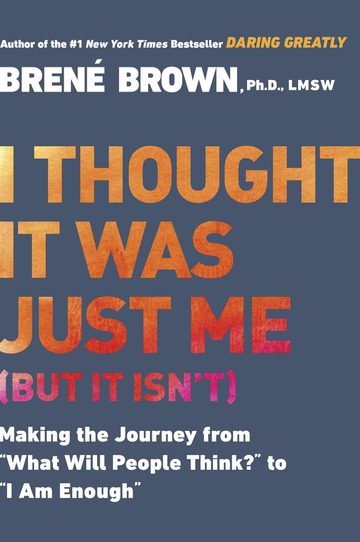
I Thought It Was Just Me is Brené Brown's first major book, written from her research on shame as a social scientist. It predates her TED talk and the more popular Daring Greatly, and it is in some ways more useful — longer, more detailed, and more closely tied to the interview data she collected from hundreds of women. The central finding is that shame is a universal experience most people suffer in silence, and that the antidote is not positive thinking or self-esteem, but shame resilience: the capacity to recognize shame, understand its triggers, move through it without losing yourself, and reach toward connection rather than withdrawal.
Brown defines shame carefully: it is the intensely painful feeling that you are fundamentally flawed and therefore unworthy of love and belonging. She distinguishes it from guilt (which is about behavior — "I did something bad") and from embarrassment and humiliation. Shame is existential: it says "I am bad," not "I did something bad." That distinction matters because the strategies for handling it are different. Guilt can motivate change. Shame almost never does. It produces hiding, pleasing, perfectionism, and aggression — all defenses against the threat of exposure.
What it gets right
- 1.
Shame is the feeling that you are fundamentally flawed and unworthy of love and belonging. It differs from guilt, which is about behavior rather than identity.
- 2.
Shame thrives in secrecy and silence. The most reliable antidote is empathic connection — being witnessed without judgment by someone you trust.
- 3.
Perfectionism is not the same as the pursuit of excellence. It is a shield against the pain of judgment and blame, driven by shame rather than by genuine standards.
What it covers
Who wrote it
Brené Brown is a research professor at the University of Houston who has spent more than two decades studying courage, vulnerability, shame, and empathy. Her 2010 TEDxHouston talk on vulnerability became one of the most viewed TED talks of all time. Her other books include Daring Greatly, Rising Strong, Braving the Wilderness, and Atlas of the Heart. She hosts the podcasts Unlocking Us and Dare to Lead and is the founder of Brave Leaders Inc. She holds a Ph.D. in social work from the University of Houston.
