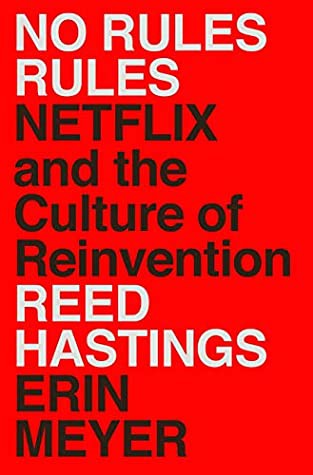
Talk to No Rules Rules: Netflix and the Culture of Reinvention like its author wrote you back.
Get the ideas that fit your life — not generic summaries.
- Chat with the book
- Audiobook-style main ideas
- Adapts to your life and goals
- Helps you take action
No Rules Rules: Netflix and the Culture of Reinvention, in detail
No Rules Rules is Reed Hastings's account of the management philosophy that has governed Netflix since the company pivoted from DVDs to streaming and built one of the most watched entertainment platforms in the world. Co-written with INSEAD professor Erin Meyer, it alternates between Hastings's perspective on the practices and Meyer's analysis of how they appear to outsiders — particularly to employees from cultures with different assumptions about hierarchy and feedback.
The Netflix culture was codified in a widely circulated slide deck called the Netflix Culture Deck, written by Hastings and former Chief Talent Officer Patty McCord. No Rules Rules is the book-length elaboration of that deck. The core argument is that the traditional tools of management — rules, procedures, approval processes, performance improvement plans — are optimized for preventing mistakes, not for enabling excellent work. In industries where innovation and speed matter more than error prevention, these tools are counterproductive: they add friction for high performers while barely slowing down the low performers they're designed to contain.
The alternative Netflix built is organized around three principles: talent density, candor, and freedom with responsibility. Talent density means maintaining a team where every person is exceptional at their job, which Netflix argues requires paying top of market and continuously managing out people who are no longer performing at that level. Candor means giving and receiving honest feedback constantly — in performance reviews, in the room, and in writing — rather than filtering feedback for comfort. Freedom means removing most standard corporate controls — vacation policies, expense approvals, travel limits — and replacing them with context: making sure employees understand the company's strategy and values well enough to make decisions that a more rule-bound system would require approvals for.
The book is candid about the challenges: radical candor without sufficient psychological safety is just cruelty, talent density without diverse perspectives can become an echo chamber, and unlimited freedom requires enormous management judgment to implement well. Meyer's counterpoint sections add rigor and international perspective, making this more than a corporate hagiography.
The big ideas
- 1.
Talent density — a team where every member is exceptional — is the foundation of the Netflix model. Rules are for managing mediocre teams; exceptional teams need context and autonomy.
- 2.
The Keeper Test: would you fight hard to keep this person if they said they were leaving? If not, you already have your answer about whether they belong on the team.
- 3.
Candor is a skill, not just a value. Honest feedback delivered without care damages relationships; honest feedback delivered with context and care improves performance and builds trust.
