Talk to Spare like its author wrote you back.
Get the ideas that fit your life — not generic summaries.
- Chat with the book
- Audiobook-style main ideas
- Adapts to your life and goals
- Helps you take action
Spare, in detail
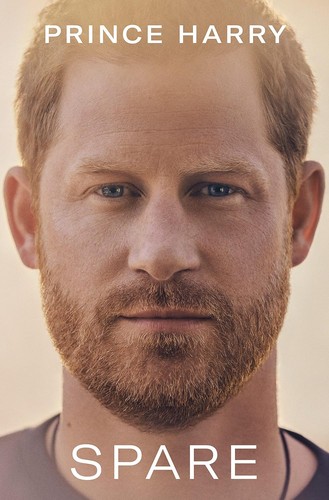
Spare is Prince Harry's account of his life from childhood through his decision to step back from senior royal duties in 2020. Written with ghostwriter J. R. Moehringer, it covers his mother Diana's death when he was twelve, his years in the military including two tours in Afghanistan, his relationship with Meghan Markle, and the escalating conflict with the British press and, eventually, with his own family. The title refers to the royal phrase "an heir and a spare" — a term Harry says defined how he was seen from birth.
The book's emotional center is Diana. Harry describes never fully grieving her death, partly because royal protocol discouraged public displays and partly because for years he held onto the hope, however irrational, that she had faked her own death. The section covering his therapy in his early thirties — where he was finally encouraged to process the loss — is among the most candid writing in the book. His account of PTSD from combat and from the tabloid press, and his eventual decision to seek help, sits at odds with the stiff-upper-lip culture he was raised in.
The family conflict at the heart of Spare — primarily with his brother William and stepmother Camilla, but also with his father Charles — is rendered with a specificity that most royal accounts avoid. Harry names incidents, dates conversations, and describes physical altercations. Whether the reader finds this courageous or excessive will likely depend on their prior views of the royal family. Harry presents himself as the only member willing to tell the truth; critics note that a memoir is inherently one-sided testimony.
Whatever one makes of the family dynamics, Spare is a readable account of growing up in an institution that prioritizes image over wellbeing, and of what it costs to leave one. Moehringer's hand is evident in the pacing and the literary quality of individual scenes. As a document of a particular kind of childhood trauma — the public kind, where grief is performed rather than felt — it is more affecting than the tabloid surrounding it suggests.
The big ideas
- 1.
Harry describes the royal institution as one that consistently chose press relations over the mental health of its members, including children.
- 2.
The death of Princess Diana when Harry was twelve left unresolved grief that shaped much of his subsequent behavior, including risk-taking and emotional unavailability.
- 3.
His two tours in Afghanistan gave Harry a sense of purpose and identity that he found difficult to replicate in ceremonial royal life.
