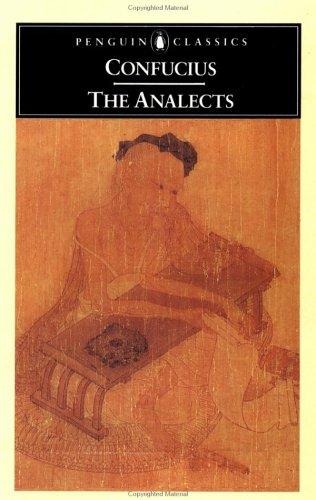
Talk to The Analects like its author wrote you back.
Get the ideas that fit your life — not generic summaries.
- Chat with the book
- Audiobook-style main ideas
- Adapts to your life and goals
- Helps you take action
What it argues
The Analects (Lunyu) is the primary source for Confucian thought — a compilation of sayings, brief dialogues, and anecdotes attributed to Confucius (551–479 BCE) and his disciples, assembled over generations after his death. It is one of the most influential texts in East Asian history, shaping Chinese civilization, governance, and social ethics for over two millennia, and its influence extends into Korea, Japan, and Vietnam. The text resists systematic summary because it was never designed as a system — it is a record of a teacher thinking aloud, responding to students in different situations, and embodying the virtues he commended.
The central concept is ren — often translated as benevolence, humaneness, or goodness — the quality of genuine care for others that Confucius placed at the heart of ethical life. Ren cannot be reduced to a rule or a technique; it is a cultivated disposition expressed in thousands of ordinary acts. What does ren look like? According to Confucius, it looks like overcoming yourself and returning to ritual propriety (li). Ritual here is not empty ceremony but the structure of right relationship: the proper forms of address, ceremony, mourning, and deference that constitute a shared moral order.
What it gets right
- 1.
Ren — benevolence or humaneness — is the central virtue: genuine care for others expressed through countless ordinary acts rather than grand gestures.
- 2.
The junzi (exemplary person) is not born but made through sustained practice, learning, self-examination, and the cultivation of virtue over a lifetime.
- 3.
Li (ritual propriety) structures right relationship and provides the shared forms through which virtue expresses itself socially.
What it covers
Who wrote it
Confucius (551–479 BCE), known in Chinese as Kong Qiu or Kong Fuzi, was a Chinese philosopher, teacher, and political thinker whose teachings profoundly shaped East Asian culture and civilization. He lived during the Spring and Autumn Period of Chinese history, a time of political fragmentation and social upheaval. He spent years traveling among the warring states seeking a ruler who would implement his vision of governance through virtue. His students compiled his sayings and dialogues into the Analects after his death, and Confucian thought became the official state philosophy of Han dynasty China. It remained central to Chinese civil service examinations until 1905.
