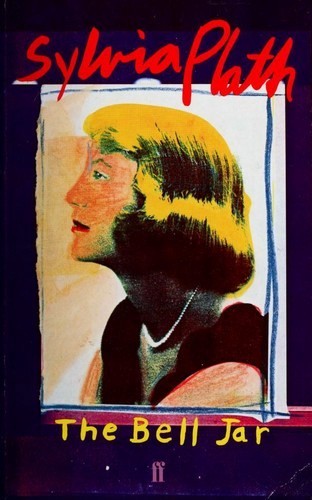
Talk to The Bell Jar like its author wrote you back.
Get the ideas that fit your life — not generic summaries.
- Chat with the book
- Audiobook-style main ideas
- Adapts to your life and goals
- Helps you take action
What it argues
The Bell Jar is Sylvia Plath's only novel, published in January 1963 under the pseudonym Victoria Lucas, one month before Plath's death. It follows Esther Greenwood, a talented young woman from the suburbs of Boston who wins a guest editorship at a New York fashion magazine and returns home to find herself unable to work, sleep, or function — sliding into a severe depression that leads to a suicide attempt, psychiatric hospitalization, and a long, uncertain recovery. The novel is closely autobiographical; Plath had her own breakdown and hospitalization in 1953, at roughly the same age as Esther.
The book's first section is a sharp social comedy about the absurdity of the magazine world Esther is supposed to be grateful to inhabit. She watches other women around her navigate the rituals of beauty and ambition with apparent ease, and feels her own inability to perform the expected emotions as evidence of something wrong with her. Plath's ear for status and pretension is exact. The comedy cracks in the second section, when Esther returns home and the depression takes hold — not with dramatic collapse but with a withdrawal that the people around her struggle to see until it is already severe.
What it gets right
- 1.
Plath depicts depression not as overwhelming sadness but as a kind of stasis — the inability to read, write, sleep, or feel that the world's requirements make any sense.
- 2.
The novel's social satire is inseparable from its psychological portrait: the limited options available to women in the 1950s are part of what makes Esther's breakdown legible.
- 3.
Esther's ambivalence toward the treatment she receives — she finds some of it harmful and some genuinely helpful — is more nuanced than most accounts of psychiatric hospitalization.
What it covers
Who wrote it
Sylvia Plath (1932–1963) was an American poet, novelist, and short story writer. Born in Boston, she attended Smith College and later Cambridge University on a Fulbright scholarship. Her poetry collection The Colossus was published in 1960, and her posthumous collection Ariel, published in 1965, established her reputation as one of the major poets of the twentieth century. The Bell Jar was first published in January 1963 under the pseudonym Victoria Lucas and was published under her name posthumously in 1971. Plath died in London in February 1963. She won the Pulitzer Prize posthumously in 1982 for her Collected Poems.
