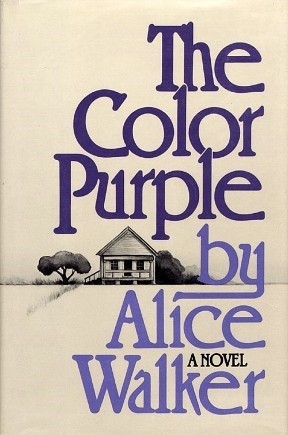
Talk to The Color Purple like its author wrote you back.
Get the ideas that fit your life — not generic summaries.
- Chat with the book
- Audiobook-style main ideas
- Adapts to your life and goals
- Helps you take action
What it argues
The Color Purple is Alice Walker's epistolary novel set in rural Georgia in the 1930s, told almost entirely through the letters of Celie, a Black woman who has survived sexual abuse, forced marriage, and the theft of her children. The book follows Celie across decades as she moves from silence and submission to a hard-won selfhood. Walker won the Pulitzer Prize and the National Book Award in 1983, making her the first Black woman to win the Pulitzer for fiction.
The novel's central relationship is between Celie and Shug Avery, a blues singer who is her husband's mistress and, later, Celie's lover and closest friend. Where Celie's husband — referred to throughout only as "Mister" — treats her as property, Shug sees and names Celie's worth. Their relationship is presented with a matter-of-factness that was controversial in 1982 and that Walker defended explicitly: the love between women is treated as neither perverse nor heroic, simply real. Shug's theology, her conviction that God is everything and is best worshipped through joy, provides the novel's philosophical backbone.
What it gets right
- 1.
Voice is survival: Celie's letters, written first to God and then to Nettie, are the act by which she maintains an interior life against a world that has tried to erase it.
- 2.
Walker presents the relationship between women — friendship, love, mentorship — as a primary site of healing and self-recognition, more reliable in the novel than any institution.
- 3.
The decision to call Celie's husband only 'Mister' throughout the novel is formal and political: he does not merit a name because he has refused to see Celie as a person.
What it covers
Who wrote it
Alice Walker (born 1944) is an American novelist, short story writer, poet, and activist. She grew up in Georgia and attended Spelman College before transferring to Sarah Lawrence College on a scholarship. She was active in the civil rights movement and has been a vocal advocate for women's rights, nuclear disarmament, and Palestinian rights throughout her life. Her other major works include The Third Life of Grange Copeland, Meridian, In Search of Our Mothers' Gardens, and the short story collection In Love and Trouble. She has taught at multiple universities including UC Berkeley and Brandeis.
