Talk to The Executioner's Song like its author wrote you back.
Get the ideas that fit your life — not generic summaries.
- Chat with the book
- Audiobook-style main ideas
- Adapts to your life and goals
- Helps you take action
What it argues
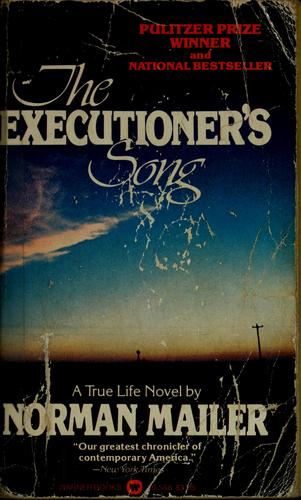
The Executioner's Song is Norman Mailer's Pulitzer Prize-winning account of Gary Gilmore, the convicted murderer who in 1977 became the first person executed in the United States after the Supreme Court reinstated the death penalty. The book runs over a thousand pages and is divided into two parts: "Western Voices," which covers the months before the murders, and "Eastern Voices," which covers the trial, the legal battles, Gilmore's insistence on his own execution, and the media circus that followed. Mailer called it a "true life novel," and the distinction matters: it is written with novelistic technique — interior scenes, reconstructed dialogue, granular physical detail — but based entirely on interviews and primary sources.
Gilmore himself is the book's moral center, or rather its moral void. He comes across as intelligent, occasionally charming, thoroughly violent, and essentially untreatable. Mailer gives him full dimension without excusing him. The two murders — of a gas station attendant and a motel manager, both random, both brutal — are rendered without sensationalism and without false significance. Gilmore killed because he wanted to. He wanted to die because he believed in reincarnation and was tired of this life. The simplicity of his motives is more unsettling than any psychological complexity would have been.
What it gets right
- 1.
Gary Gilmore's insistence on his own execution was not a legal technicality but a central event — he actively fought against the legal efforts to save him, making the state an instrument of his will.
- 2.
Mailer's 'true life novel' approach uses novelistic technique on factual material, creating intimacy with sources without invention. The result blurs genre in ways that raised serious debate about journalism and literature.
- 3.
The book is as much about the media industry that formed around Gilmore's death as about Gilmore himself. Lawrence Schiller's deal-making is rendered with the same detail as the murders.
What it covers
Who wrote it
Norman Mailer (1923–2007) was one of the most prominent and controversial American writers of the twentieth century. He won the Pulitzer Prize twice, first for The Armies of the Night in 1969 and again for The Executioner's Song in 1980. His other works include The Naked and the Dead, Miami and the Siege of Chicago, and The Armies of the Night. Mailer co-founded The Village Voice, ran for mayor of New York City in 1969, and remained a polarizing public intellectual until his death. The Executioner's Song is widely considered his finest work.
