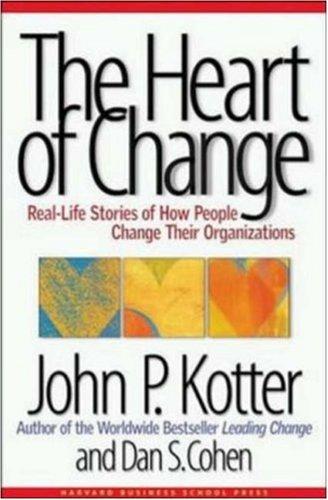
Talk to The Heart of Change like its author wrote you back.
Get the ideas that fit your life — not generic summaries.
- Chat with the book
- Audiobook-style main ideas
- Adapts to your life and goals
- Helps you take action
The Heart of Change, in detail
The Heart of Change is John Kotter and Dan Cohen's follow-up to Kotter's earlier eight-step model for leading change. Where Leading Change laid out the framework conceptually, this book populates it with real stories — 130 interviews with managers and executives at organizations that went through significant transformation. The core argument is deceptively simple: large-scale change succeeds or fails based on whether people feel differently, not whether they think differently. The authors call this the "see-feel-change" dynamic, and the stories they collect are built around it.
The eight steps from Kotter's earlier work appear again: increase urgency, build the guiding team, develop the vision and strategy, communicate for buy-in, empower action, produce short-term wins, maintain momentum, and make change stick. But the book's contribution is showing what each step looks like in practice and, more specifically, what emotional shift it requires. Each chapter opens with a story in which someone changed behavior not because they were given better data but because they were shown something concrete — a dramatic demonstration, a tangible result, a vivid contrast — that hit them in a way logic alone hadn't.
The practical implication runs through every chapter: managers who rely on analysis and argument as their primary change tools are working against human psychology. Most resistance to change is not intellectual; it's emotional. People cling to familiar processes because change feels threatening, because they don't trust the people leading it, or because no one has made the cost of the status quo real to them. Kotter and Cohen argue that the manager's job is to surface that emotional reality and address it directly rather than drowning it in PowerPoint.
The book's limitation is its format. The stories are illustrative but thin — each is compressed to a paragraph or two, which makes them vivid but sometimes superficial. Readers who want deep case analysis will find the treatment frustrating. What the book does well is give change practitioners language for conversations about the emotional dimensions of transformation that are often left unspoken in organizations that pride themselves on data-driven decision-making.
The big ideas
- 1.
Large-scale change is driven more by shifting feelings than by sharing information. The see-feel-change dynamic matters more than the analyze-think-change alternative.
- 2.
Urgency must be felt, not just understood. Dramatic demonstrations and tangible evidence move people where statistics and memos don't.
- 3.
The guiding coalition needs credibility, authority, and trust. A change effort led by people the organization doesn't respect will fail regardless of the strategy's quality.
