Talk to The Little Prince like its author wrote you back.
Get the ideas that fit your life — not generic summaries.
- Chat with the book
- Audiobook-style main ideas
- Adapts to your life and goals
- Helps you take action
What it argues
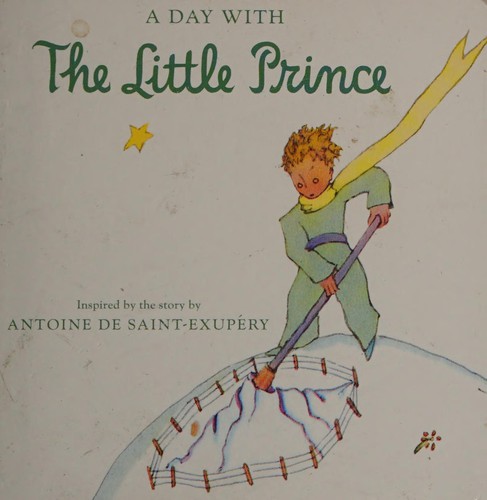
Antoine de Saint-Exupéry wrote The Little Prince in New York in 1942, in exile from a France under occupation, and the book was published in French and English simultaneously in 1943, the year before he disappeared on a reconnaissance flight. It is a short illustrated fable told by an aviator who crashes in the Sahara and meets a small prince from asteroid B-612 who has traveled from planet to planet observing the various fixations of adults — a king with no subjects, a conceited man who wants only applause, a businessman who counts the stars he believes he owns. The prince is trying to understand what matters.
The book's most quoted line — "What is essential is invisible to the eye" — is spoken by a fox the prince tames in the desert. Taming, in Saint-Exupéry's sense, means creating a bond through patient attention: the fox asks the prince to return at the same hour each day so that anticipation can build into relationship. What you tame, you become responsible for. The rose the prince left behind on his asteroid — vain, demanding, fragile, unique to him — is what he finally understands as essential: not because she is objectively important, but because of the time he has given her.
What it gets right
- 1.
What is essential is invisible to the eye. The things that matter most — relationships, care, love — cannot be measured, owned, or demonstrated through statistics.
- 2.
To tame something is to create a bond through patient, repeated attention. What you tame, you become responsible for. Responsibility for the unique is the basis of real relationship.
- 3.
Adults reduce experience to numbers and categories, mistaking what is countable for what is important. This is a kind of blindness that children haven't yet fully acquired.
What it covers
Who wrote it
Antoine de Saint-Exupéry (1900–1944) was a French aviator and writer whose experience as a mail pilot in Africa and South America provided the material for his novels Southern Mail and Night Flight, and for much of Wind, Sand and Stars, his most celebrated work before The Little Prince. He flew reconnaissance missions for the Free French Air Force during World War II and disappeared over the Mediterranean in July 1944 on a mission from which he never returned. The Little Prince, written in exile in New York in 1942 and published in 1943, has become one of the most translated and most widely read books in the world.
