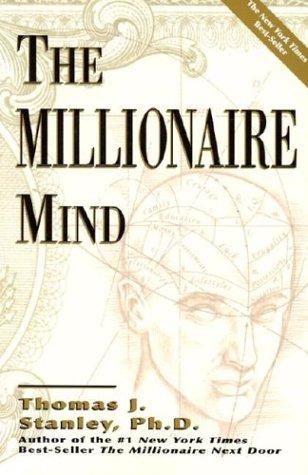
Talk to The Millionaire Mind like its author wrote you back.
Get the ideas that fit your life — not generic summaries.
- Chat with the book
- Audiobook-style main ideas
- Adapts to your life and goals
- Helps you take action
What it argues
The Millionaire Mind is Thomas J. Stanley's follow-up to The Millionaire Next Door, this time drawing on surveys of over 1,300 millionaires to probe the attitudes, habits, and choices behind their wealth accumulation. Where the earlier book focused on spending patterns and what millionaires don't buy, this one goes deeper into how they think — about risk, education, work, family, and the choices they made that separated them from people with similar starting conditions.
One of the book's most consistent findings is that academic performance is a weak predictor of financial success among the wealthy. Many of the millionaires Stanley surveyed were not top students and were sometimes told early in life that they weren't smart enough for elite careers. They compensated by choosing vocations where they could build equity and control their own economic environment — often through private business ownership rather than corporate employment. What predicted success more reliably was courage, integrity, focus, and the ability to tolerate risk.
What it gets right
- 1.
Academic achievement is a weak predictor of financial success. More millionaires in Stanley's sample reported being B or C students than graduating top of their class.
- 2.
Courage to take calculated risk is one of the most consistently cited traits of millionaires. Many describe their wealth as the result of acting when others hesitated.
- 3.
Most wealthy people in the study are business owners, not corporate executives. Equity ownership, not salary, is the primary engine of wealth accumulation.
What it covers
Who wrote it
Thomas J. Stanley was an American researcher and author who spent his career studying affluent Americans and the behaviors that produce wealth over time. He earned a doctorate from the University of Georgia and taught marketing at Georgia State University. His research into high-net-worth households, conducted over more than two decades, produced the books The Millionaire Next Door and The Millionaire Mind, both of which drew wide readership for their data-driven challenges to common assumptions about wealth. Stanley died in 2015.
