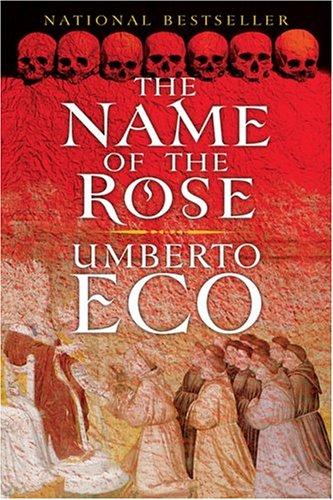
Talk to The Name of the Rose like its author wrote you back.
Get the ideas that fit your life — not generic summaries.
- Chat with the book
- Audiobook-style main ideas
- Adapts to your life and goals
- Helps you take action
What it argues
In 1327, the Franciscan friar William of Baskerville arrives at an Italian Benedictine abbey with his novice Adso to attend a theological disputation. Before the delegates arrive, monks begin dying under mysterious circumstances, and the abbot asks William to investigate quietly. The deaths appear linked to the abbey's vast library — a labyrinthine structure deliberately designed to prevent access to its most dangerous texts. William, modeled loosely on Roger Bacon and Sherlock Holmes, deploys empirical reasoning and semiotic analysis in an environment where both are viewed with suspicion.
Eco's novel is a detective story that is also a meditation on how medieval Christianity managed knowledge. The library, the labyrinth, and the forbidden book at the center of the plot are all expressions of the same idea: that certain knowledge is considered too dangerous to be widely accessible, and that the attempt to control it produces violence. Eco was a semiotician and medieval scholar, and the novel is dense with authentic period theology, heresy trials, scholastic debates, and ecclesiastical politics. None of this is decoration. The theological disputes over Franciscan poverty, the trial of Fra Dolcino's movement, the Inquisition's arrival in the form of Bernardo Gui — all are historically grounded and materially relevant to the plot.
What it gets right
- 1.
The library as labyrinth is one of the great sustained metaphors in modern fiction: access to knowledge is structured by power, and the labyrinth enforces hierarchy.
- 2.
William of Baskerville's empirical reasoning is systematically undermined by the novel — the evidence leads to correct conclusions through incorrect chains of reasoning, which is Eco's pointed joke about detective logic.
- 3.
Medieval Christianity's relationship to Aristotle is central: the second book of the Poetics, dedicated to comedy, stands in here for all knowledge deemed dangerous by those who control it.
What it covers
Who wrote it
Umberto Eco (1932–2016) was an Italian semiotician, philosopher, literary critic, and novelist. He was a professor at the University of Bologna and one of the most influential humanist intellectuals of the twentieth century. The Name of the Rose, published in Italian in 1980, was his debut novel and became an international bestseller, translated into dozens of languages. His subsequent novels include Foucault's Pendulum, The Island of the Day Before, and Baudolino. He received numerous honorary degrees and international literary prizes throughout his career.
