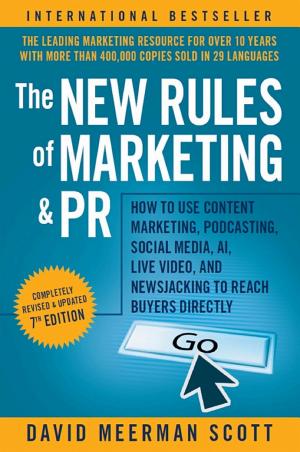
Talk to The New Rules of Marketing and PR like its author wrote you back.
Get the ideas that fit your life — not generic summaries.
- Chat with the book
- Audiobook-style main ideas
- Adapts to your life and goals
- Helps you take action
The New Rules of Marketing and PR, in detail
David Meerman Scott first published this book in 2007, when the idea that companies could speak directly to buyers without going through journalists or media buyers was still genuinely new. The central argument is that the internet fundamentally changed the economics of communication: publishing had become nearly free, audiences could be built around specific interests rather than mass demographics, and companies that understood this shift could reach buyers more effectively than traditional advertising or press relations allowed.
The old rules, as Scott describes them, meant that marketing required advertising budgets and PR required cultivating journalists. Content existed to serve those intermediaries. The new rules mean that companies can publish directly: blog posts, white papers, news releases designed for search engines and readers rather than for news editors, podcasts, videos. Scott calls the resulting content "thought leadership" and argues that providing genuinely useful information — not promotional material — is the mechanism for attracting buyers who are already searching for solutions. The book covers the mechanics of this in detail: how to write for the web, how to optimize news releases for search, how to build a media presence without paying for placement.
The book has been updated through several editions and each update has tracked the expanding toolkit — social media, podcasts, live streaming, AI tools. The core framework, though, has stayed consistent: understand your buyer personas deeply, create content that answers their questions, publish it where they look, and measure what drives actual engagement rather than impressions. Scott is relentlessly practical, and the book is full of specific templates, examples, and checklists that make the advice actionable rather than merely inspirational.
The main limitation is that the space Scott was describing in 2007 has since become extremely crowded. The advice to "just publish useful content" was differentiating in the early days of business blogging; it's now table stakes in most industries. Readers who come to this book in 2025 will find the framework sound but will need to do harder thinking about differentiation than Scott addresses. The book is strongest as an introduction to the underlying logic of inbound marketing and weakest as a guide to standing out in a saturated content environment.
The big ideas
- 1.
The internet eliminated the gatekeepers between companies and buyers. Direct communication with the audience — through content, search, and social platforms — is now both possible and necessary.
- 2.
Buyer personas are the starting point. Understanding exactly who is searching for solutions, what questions they ask, and where they look determines what you publish and where.
- 3.
News releases are no longer just for journalists. Written for search and for readers, they can drive direct buyer traffic and establish credibility independent of press coverage.
