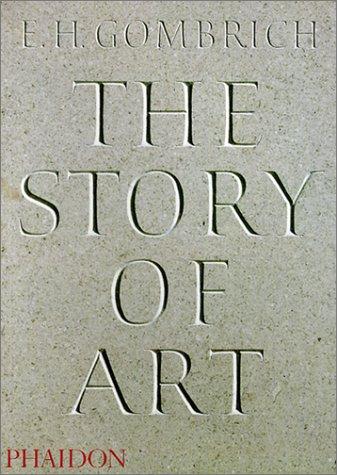
Talk to The Story of Art like its author wrote you back.
Get the ideas that fit your life — not generic summaries.
- Chat with the book
- Audiobook-style main ideas
- Adapts to your life and goals
- Helps you take action
What it argues
The Story of Art, first published in 1950 and revised across sixteen editions, is the most widely read introduction to art history ever written. Ernst Gombrich, an Austrian-born art historian who spent most of his career at the Warburg Institute in London, built the book around a single guiding principle: there is no such thing as Art, only artists. By which he means that art history is not the story of styles or periods abstractly defined, but of individual men and women who faced concrete problems of representation, inherited conventions from their predecessors, and solved those problems in ways that influenced who came after them.
The book runs from prehistoric cave paintings through the mid-twentieth century, giving roughly equal weight to each period in terms of analytical seriousness while naturally spending more pages on periods with greater surviving material. Gombrich is particularly good on the mechanics of stylistic change: how Egyptian artists constructed images from composite views, why Greek sculpture moved from the archaic smile to the naturalism of the Parthenon, how the problem of representing depth was gradually solved and then deliberately abandoned by different traditions. The central explanatory tool throughout is the idea of a "schema" — a conventional representation that artists inherit and modify, rather than simply recording what they see.
What it gets right
- 1.
Gombrich's foundational claim is that art history should be the history of artists solving concrete problems, not an abstract taxonomy of styles and periods.
- 2.
Artists work within inherited conventions — schemata — which they modify rather than abandoning entirely. Understanding style means understanding the conventions an artist inherited.
- 3.
Egyptian art was not naive; it was built on a different representational logic, showing each part of the body from its most informative angle rather than from a single fixed viewpoint.
What it covers
Who wrote it
Ernst Gombrich (1909–2001) was an Austrian-born art historian who spent most of his working life at the Warburg Institute in London, where he was director from 1959 to 1976. His major academic works include Art and Illusion, The Sense of Order, and Meditations on a Hobby Horse, which developed the theoretical ideas underlying The Story of Art. He was knighted in 1972 and received most of the major prizes in art history and cultural scholarship. The Story of Art, written for a general audience, has sold over eight million copies in more than thirty languages.
