Talk to The Symposium like its author wrote you back.
Get the ideas that fit your life — not generic summaries.
- Chat with the book
- Audiobook-style main ideas
- Adapts to your life and goals
- Helps you take action
The Symposium, in detail
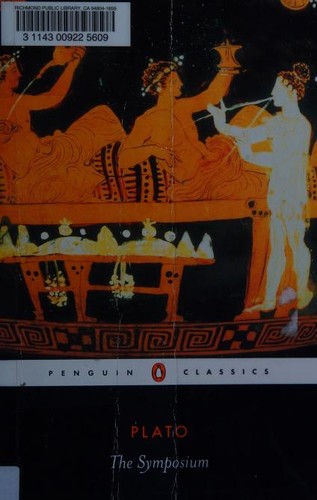
The Symposium is Plato's dialogue on the nature of love, presented as a series of speeches delivered at a dinner party in Athens around 416 BCE. Each speaker — Phaedrus, Pausanias, Eryximachus, Aristophanes, Agathon, and finally Socrates — offers a different account of Eros, the god and force of love. The setting is festive, the speeches increasingly sophisticated, and the evening is interrupted by the arrival of the drunk and disorderly Alcibiades, who offers a final speech in praise of Socrates himself.
The most famous contribution is Aristophanes' myth of the original human beings as doubled creatures — each a sphere with four arms, four legs, and two faces — who were split apart by Zeus as punishment for hubris. Love, on this account, is the longing to find one's other half. It's a beautiful and melancholy story that has entered Western culture as a way of describing romantic longing, though Plato does not endorse it as philosophy.
Socrates' speech is the philosophical center. He claims to be reporting the teachings of the priestess Diotima, who argued that love is not a god but a spirit, perpetually in lack, always pursuing what it does not have. The ascent from particular beautiful bodies to beautiful souls to beautiful practices to the Form of Beauty itself — this "ladder of love" is Plato's description of philosophy as a kind of erotic pursuit. The lover of wisdom is driven by the same energy as the lover of persons, but aims at something permanent rather than transient.
The dialogue is one of the most accessible in the Platonic corpus and one of the most literarily accomplished. The nested narration, the variety of the speeches, the comedy of Alcibiades — these are not decorative but substantive. Alcibiades' speech reveals that Socrates himself embodies the erotic ascent: he loves wisdom so completely that he cannot be seduced by physical beauty or worldly status, which is precisely what Alcibiades finds maddening and irresistible about him.
The big ideas
- 1.
Eros, for Plato, is not a divine perfection but a spirit defined by lack — desire is always desire for what one does not yet possess.
- 2.
Diotima's ladder of love describes a progression from love of a particular beautiful body to love of beauty itself, the Form that underlies all instances.
- 3.
Aristophanes' myth — that humans were split and seek reunion — is the dialogue's most memorable image but is not presented as philosophical truth; it captures something real about longing while explaining nothing about its ultimate object.
