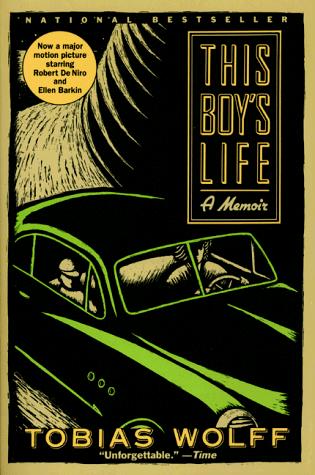
Talk to This Boy's Life like its author wrote you back.
Get the ideas that fit your life — not generic summaries.
- Chat with the book
- Audiobook-style main ideas
- Adapts to your life and goals
- Helps you take action
This Boy's Life, in detail
Tobias Wolff's memoir of his childhood in the 1950s, moving with his peripatetic mother from Florida to Utah to Seattle to the logging town of Concrete, Washington, is one of the finest examples of what might be called the stepfather memoir — a genre that emerged in the 1980s and 1990s as writers processed childhoods marked by violence, instability, and the particular powerlessness of being a child under an adult's authority. This Boy's Life is distinguished from that genre by Wolff's refusal to make himself simply a victim.
The memoir opens with Toby (as Wolff called himself as a boy) and his mother Rosemary fleeing from a violent boyfriend in Florida, heading west. Wolff's portrait of Rosemary is generous and clear-eyed: she is warm, funny, independent, and constitutionally incapable of recognizing predators before she has already committed herself to them. She marries Dwight, a mechanic in Concrete who proves to be controlling, sadistic, and petty in the specific way that small men with domestic authority can be. The Dwight chapters are the memoir's core — a portrait of low-grade sustained cruelty that is recognized as abuse only slowly and retrospectively, because it comes without dramatic single incidents.
Wolff is honest about his own adolescent deceptions and cruelties. He forges recommendation letters to escape Concrete, lies fluently and habitually, steals, and constructs a series of false versions of himself for different audiences. This capacity for self-invention, while morally problematic, is also what eventually saves him — he manages to talk his way into a prep school in Seattle and, later, into the Army and eventually into legitimate literary life. The memoir holds these two truths simultaneously: the lying was wrong, and it was survival.
The prose is clean and spare in a way that suggests both Hemingway and the short story form Wolff perfected in his fiction. He gives dialogue without heavy scaffolding, trusts scenes to carry their own weight, and applies a surgical precision to what he chooses to include. The effect is a memoir that feels like the best kind of short story — nothing extraneous, every detail doing double work.
The big ideas
- 1.
Abuse does not require dramatic episodes to be real. Dwight's cruelty is cumulative and low-grade — a sustained atmosphere of belittlement and control — which the memoir renders more honestly than theatrical violence would.
- 2.
Children's self-invention is both survival and moral liability. Wolff's chronic lying is what eventually gets him out of Concrete, and the memoir refuses to simply condemn it.
- 3.
The mother's vulnerability to abusive partners is rendered with compassion rather than judgment. Understanding her choices does not require excusing them.
