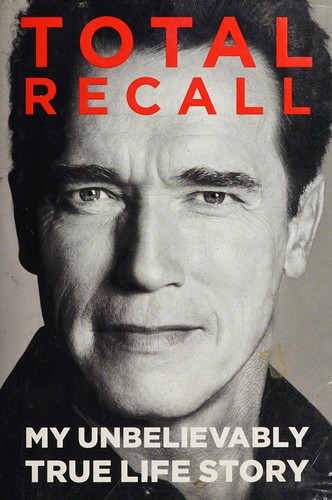
Talk to Total Recall: My Unbelievably True Life Story like its author wrote you back.
Get the ideas that fit your life — not generic summaries.
- Chat with the book
- Audiobook-style main ideas
- Adapts to your life and goals
- Helps you take action
Total Recall: My Unbelievably True Life Story, in detail
Total Recall covers three separate American careers in a single life: Arnold Schwarzenegger became the greatest bodybuilder in the world before age 25, became the highest-paid movie star in the world before age 40, and became Governor of California for two terms in his fifties. The memoir is his account of how all three happened, told in a voice that is relentlessly enthusiastic and largely without false modesty. Whether you find that quality appealing or irritating will shape your experience of the book considerably.
The early chapters on Austria and bodybuilding are the strongest. Schwarzenegger grew up in a small village in Styria under a strict, physically cold father; he describes the decision to become a bodybuilder as the first moment he chose his own identity rather than the one his circumstances provided. He was training fanatically by fourteen, had won regional titles by seventeen, and arrived in London and then California before he was twenty. His account of the bodybuilding subculture of the 1960s and 1970s — the Gold's Gym community in Venice Beach, the specific training philosophy behind his physique, his relationship with Joe Weider and with rivals like Lou Ferrigno and Franco Columbu — is the most specific and detailed section of the book.
The Hollywood section is more anecdotal. Schwarzenegger describes his early struggles to be taken seriously — his accent was considered an obstacle, his name an impossibility — and the series of decisions, including taking the Terminator role that other actors had turned down, that built his career. He is honest about the calculation behind the image: the movie star persona was as deliberately constructed as the bodybuilder persona had been. His account of his marriages, his political campaigns, and his governance of California is less analytical than the bodybuilding chapters and reads more like a highlight reel than an examination.
The book ends with the revelation, released publicly before the memoir came out, that Schwarzenegger had fathered a child with a household employee over a decade earlier while married to Maria Shriver. He includes a chapter addressing this, which is honest but brief given the severity of the betrayal it describes. Readers who expect the same level of self-examination in this section that the bodybuilding chapters provide will be disappointed. The memoir overall is more convincing as an account of how to build extraordinary physical and professional success than as a record of how to maintain a private life consistent with the values Schwarzenegger otherwise claims.
The big ideas
- 1.
Schwarzenegger's approach to bodybuilding was as psychological as physical: he believed that visualizing the exact physique he wanted in detail was a prerequisite for achieving it, and he trained his mental focus as deliberately as his muscles.
- 2.
Reinvention at scale requires ignoring the people who tell you that your current identity disqualifies you from the next one. Almost every transition Schwarzenegger made — from bodybuilding to film, from film to politics — was predicted to fail by people with plausible reasons.
- 3.
Immigrant ambition, in Schwarzenegger's telling, has a specific quality: coming from outside the system makes the system's rules feel negotiable rather than fixed. He benefited from not having absorbed the assumptions of people who had grown up with access.
