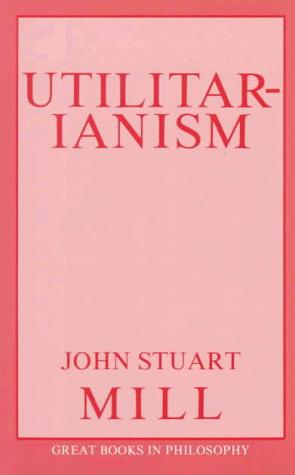
Talk to Utilitarianism like its author wrote you back.
Get the ideas that fit your life — not generic summaries.
- Chat with the book
- Audiobook-style main ideas
- Adapts to your life and goals
- Helps you take action
Utilitarianism, in detail
Utilitarianism, first published in 1863 after appearing in Fraser's Magazine the previous year, is Mill's defense and refinement of the utilitarian moral theory he inherited from Jeremy Bentham. The core claim is that actions are right in proportion as they tend to promote happiness, wrong as they tend to produce the reverse. Mill's task is to clarify this claim against objections, extend it in directions Bentham had not pursued, and show that it is compatible with ordinary moral convictions about justice, rights, and the intrinsic value of character.
The most important departure from Bentham is Mill's distinction between higher and lower pleasures. Bentham's utilitarianism was quantitative — more pleasure is simply better. Mill argues that pleasures differ in quality, not just quantity, and that the pleasures of intellect, sentiment, and moral feeling are superior in kind to bodily pleasures. His criterion is the preference of those who have experienced both: competent judges who have sampled both pushpin and poetry will prefer poetry. This move is designed to answer the "pig satisfied" objection — the worry that utilitarianism makes a happy animal preferable to a moderately happy human.
The fifth chapter, on justice, is the most philosophically sophisticated part of the essay. Mill argues that justice is not a counterexample to utilitarianism but its most powerful expression: justice intuitions track the subset of utility claims that protect the foundations of social welfare — personal security, rights, and predictable treatment. When justice conflicts with aggregate utility, Mill's framework is less clear, and critics find this chapter evasive at precisely the point of greatest pressure.
The essay is short — about sixty pages — and reads as an intervention in a philosophical debate rather than a systematic treatise. Mill's arguments are often more suggestive than conclusive. The "proof" of utility — that happiness is desirable because it is desired — is widely regarded as a logical fallacy. But as a statement of what sophisticated consequentialist ethics requires and where it faces real difficulty, the essay remains the most readable entry point into the utilitarian tradition.
The big ideas
- 1.
The greatest happiness principle holds that the right action maximizes aggregate happiness across all affected parties, with each person counting for one and no one for more than one.
- 2.
Mill distinguishes higher from lower pleasures: intellectual and moral pleasures are superior in kind, not just quantity, to bodily pleasures — a departure from Bentham's purely quantitative account.
- 3.
The competent judge criterion — asking which pleasures those with experience of both prefer — is Mill's way of operationalizing the distinction between higher and lower pleasures.
