Talk to You Can Be a Stock Market Genius like its author wrote you back.
Get the ideas that fit your life — not generic summaries.
- Chat with the book
- Audiobook-style main ideas
- Adapts to your life and goals
- Helps you take action
What it argues
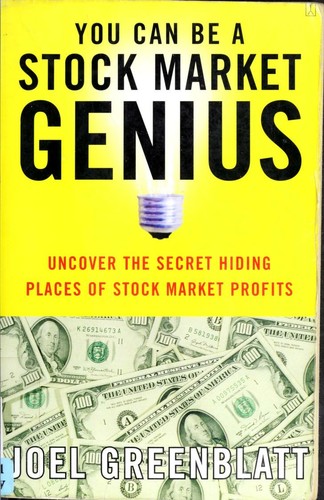
You Can Be a Stock Market Genius is Joel Greenblatt's guide to finding market-beating opportunities in corporate special situations: spinoffs, rights offerings, restructurings, mergers, and bankruptcies. The awkward title is intentional self-deprecation — Greenblatt is mocking the genre of financial bestsellers that promise easy results, while actually delivering a book that requires real analytical work to use. Written in 1997 when Greenblatt was generating extraordinary returns at Gotham Capital, it documents the specific categories of situations he found most productive.
The core idea is that certain corporate events create predictable mispricings because they force institutional selling regardless of price. When a large company spins off a small subsidiary, institutional investors who hold the parent stock and receive shares in the spinoff typically sell them immediately — not because the spinoff is unattractive, but because the spinoff is too small for their mandates, or is in the wrong industry, or lacks a research coverage. This forced selling creates opportunities for patient individual investors who can read the registration documents and understand what they are actually receiving.
What it gets right
- 1.
Spinoffs are among the most reliably productive special situations because institutional forced selling creates mispricings that have nothing to do with the spinoff's underlying value.
- 2.
The key signal in a spinoff is insider behavior: when management of the spun-off entity is heavily incentivized through stock and options, their interests are aligned with outside shareholders.
- 3.
SEC filings — Form 10, proxy statements, S-1 registrations — contain the information needed to evaluate special situations and are publicly available; most investors simply don't read them.
What it covers
Who wrote it
Joel Greenblatt is a value investor and founder of Gotham Capital, a hedge fund that generated approximately 40% annual returns over a decade from its 1985 founding. He is a professor at Columbia Business School and has taught value investing there for many years. His other books include The Little Book That Still Beats the Market and The Big Secret for the Small Investor. He is a trustee of the Success Academy Charter Schools in New York City and has been a major donor to education reform initiatives.
