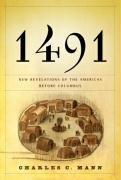
Talk to 1491: New Revelations of the Americas Before Columbus like its author wrote you back.
Get the ideas that fit your life — not generic summaries.
- Chat with the book
- Audiobook-style main ideas
- Adapts to your life and goals
- Helps you take action
What it argues
Charles Mann's 1491 sets out to correct a widespread misconception: that the Americas before Columbus were a mostly empty wilderness populated by small, isolated bands of hunter-gatherers living in gentle harmony with an untouched nature. The picture that has emerged from archaeology, genetics, ecology, and epidemiology over the past several decades is radically different. The pre-Columbian Americas were densely populated, deeply engineered, and home to some of the most sophisticated civilizations in the world at the time of contact.
Mann argues on three main fronts. First, the population: estimates of pre-contact indigenous populations have revised sharply upward, with some scholars arguing that the Americas had more people than Europe in 1491. The catastrophic collapse that followed contact — from diseases to which American populations had no immunity — may have killed 90 percent of the hemisphere's inhabitants within a century. Second, the technology: from the terraformed soils of Amazonia (the "dark earths" of the terra preta) to the engineered flood plains of the Maya lowlands, indigenous peoples actively managed their landscapes at a continental scale. The "untouched wilderness" that European settlers encountered was in many cases a recently emptied landscape still showing the scars of demographic collapse. Third, the political and social complexity: the Aztec empire, the Inca road system, and the Haudenosaunee confederacy (which may have influenced American democratic thought) represent levels of political organization that the received story of primitive peoples substantially underestimates.
What it gets right
- 1.
The pre-Columbian Americas were far more densely populated than the colonial and post-colonial narrative assumed, with some estimates placing the hemisphere's population above Europe's at the time of contact.
- 2.
European diseases killed up to 90 percent of indigenous populations within a century of contact, creating the 'wilderness' that later settlers encountered — a landscape still recovering from catastrophic depopulation.
- 3.
Amazonia was not pristine wilderness but a densely managed landscape. Terra preta — deliberately engineered dark soils — shows that indigenous peoples transformed the Amazon basin at continental scale.
What it covers
Who wrote it
Charles C. Mann is an American science journalist and author who has written for Science, The Atlantic, and Wired, among other publications. His books include 1491, its sequel 1493: Uncovering the New World Columbus Created, and The Wizard and the Prophet, which examines two competing visions of environmental management. He has been a finalist for the National Book Award and has won multiple awards for science journalism. His work is characterized by rigorous engagement with scientific debate and an ability to translate contested specialist arguments into accessible narrative without flattening the disagreements.
