Talk to 80/20 Running like its author wrote you back.
Get the ideas that fit your life — not generic summaries.
- Chat with the book
- Audiobook-style main ideas
- Adapts to your life and goals
- Helps you take action
What it argues
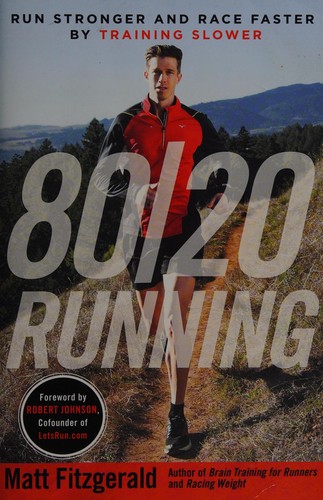
80/20 Running is Matt Fitzgerald's evidence-based argument that the most common mistake recreational runners make is training too hard, too often. Drawing on research into the training patterns of elite endurance athletes, Fitzgerald shows that the world's best runners, swimmers, cyclists, and rowers consistently do approximately eighty percent of their training at low intensity — well below the lactate threshold — and only twenty percent at moderate to high intensity. Recreational athletes, by contrast, tend to cluster their training in a "moderate intensity zone" that is too hard to recover from quickly but not hard enough to drive the adaptations that come from true high-intensity work.
The 80/20 principle is backed by multiple lines of evidence. Physiologically, low-intensity training produces large aerobic adaptations — mitochondrial density, capillary development, fat oxidation efficiency — without generating the stress hormones that interfere with recovery. High-intensity work, done sparingly, generates additional stimulus that low-intensity work alone cannot produce. Moderate-intensity training produces a worst-of-both-worlds outcome: significant fatigue without the maximum adaptive signal of either pole.
What it gets right
- 1.
Elite endurance athletes in all sports consistently do approximately eighty percent of their training at low intensity (below the first lactate threshold) and only twenty percent at moderate to high intensity.
- 2.
Most recreational runners do too much moderate-intensity work — harder than easy, easier than hard — which produces significant fatigue without the maximum adaptive stimulus of either pole.
- 3.
Low-intensity training drives powerful aerobic adaptations: increased mitochondrial density, improved fat oxidation, and cardiovascular efficiency that are produced most effectively below the lactate threshold.
What it covers
Who wrote it
Matt Fitzgerald is an American endurance sports author, certified sports nutritionist, and running coach. He has written over thirty books on endurance training and nutrition, including Racing Weight, Brain Training for Runners, and How Bad Do You Want It? He has contributed to Runner's World, Triathlete, Outside, and Bicycling, and has coached athletes ranging from recreational runners to Olympians. Fitzgerald is a longtime recreational endurance athlete who has completed more than two dozen marathons. 80/20 Running, published in 2014, has become one of the most-referenced books on running training philosophy.
