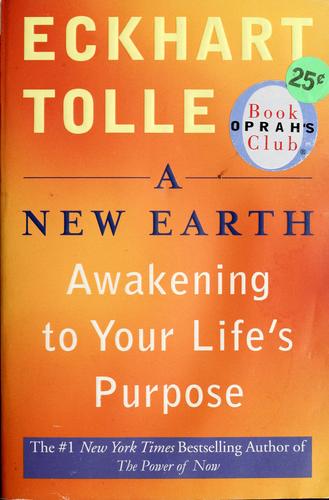
Talk to A New Earth: Awakening to Your Life's Purpose like its author wrote you back.
Get the ideas that fit your life — not generic summaries.
- Chat with the book
- Audiobook-style main ideas
- Adapts to your life and goals
- Helps you take action
A New Earth: Awakening to Your Life's Purpose, in detail
A New Earth is Eckhart Tolle's follow-up to The Power of Now, applying the same framework of presence and ego-transcendence to a broader account of human dysfunction and its transformation. Published in 2005 and selected for Oprah Winfrey's book club in 2008, it sold over five million copies in the United States alone. Its core argument is that the majority of human suffering — personal and collective — stems from identification with the ego: the voice in the head that constantly narrates, judges, wants, and fears.
Tolle's diagnosis of the ego is detailed and often penetrating. The ego needs to be right, needs enemies, needs the past (to define itself through story) and the future (to project its continued existence through hope and fear). It collects grievances and resentments — what Tolle calls the "pain-body," the accumulated emotional suffering that lives in the body and periodically takes over behavior. The pain-body seeks more pain to feed itself, which is why some people seem drawn compulsively to conflict and suffering.
The alternative Tolle proposes is presence — what he calls the background awareness that watches the ego's activity without being it. This awareness is not another thought but the space in which thoughts arise. When you are present, the ego's activity becomes audible rather than simply constitutive of experience, and that gap between the thinker and the watcher is the beginning of transformation. Tolle draws on Christian mysticism (Meister Eckhart, whose first name he adopted), Zen, and Hindu Vedanta to fill out this framework, without aligning himself exclusively with any tradition.
The book's final chapters distinguish inner purpose (awakening to the present moment) from outer purpose (what you do in the world). Tolle argues that any outer purpose pursued without inner presence will generate more ego and more suffering. Outer purpose aligned with inner presence — action from the state of presence rather than ego — is the new earth of the title: the transformed relationship between humans and existence that Tolle believes is possible and urgent.
The big ideas
- 1.
The ego is the voice in the head that constantly narrates and judges — identification with this voice, rather than awareness of it, is the source of most human suffering.
- 2.
The pain-body is accumulated emotional suffering stored in the body, which periodically takes over behavior and seeks more pain to sustain itself.
- 3.
Presence — the background awareness in which thoughts arise — is the antidote to ego identification; it is not another thought but the space between thoughts.
