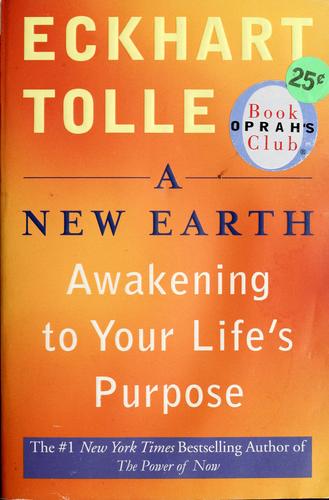
A New Earth: Awakening to Your Life's Purpose by Eckhart Tolle is a 2005 religion & spirituality book about ego, consciousness, presence. The ego is the voice in the head that constantly narrates and judges — identification with this voice, rather than awareness of it, is the source of most human suffering.
Summary
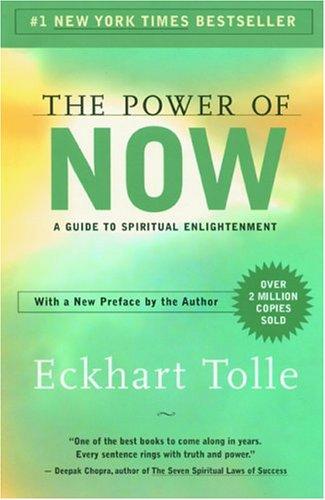
A New Earth is Eckhart Tolle's follow-up to The Power of Now, applying the same framework of presence and ego-transcendence to a broader account of human dysfunction and its transformation. Published in 2005 and selected for Oprah Winfrey's book club in 2008, it sold over five million copies in the United States alone. Its core argument is that the majority of human suffering — personal and collective — stems from identification with the ego: the voice in the head that constantly narrates, judges, wants, and fears.
Tolle's diagnosis of the ego is detailed and often penetrating. The ego needs to be right, needs enemies, needs the past (to define itself through story) and the future (to project its continued existence through hope and fear). It collects grievances and resentments — what Tolle calls the "pain-body," the accumulated emotional suffering that lives in the body and periodically takes over behavior. The pain-body seeks more pain to feed itself, which is why some people seem drawn compulsively to conflict and suffering.
The alternative Tolle proposes is presence — what he calls the background awareness that watches the ego's activity without being it. This awareness is not another thought but the space in which thoughts arise. When you are present, the ego's activity becomes audible rather than simply constitutive of experience, and that gap between the thinker and the watcher is the beginning of transformation. Tolle draws on Christian mysticism (Meister Eckhart, whose first name he adopted), Zen, and Hindu Vedanta to fill out this framework, without aligning himself exclusively with any tradition.
The book's final chapters distinguish inner purpose (awakening to the present moment) from outer purpose (what you do in the world). Tolle argues that any outer purpose pursued without inner presence will generate more ego and more suffering. Outer purpose aligned with inner presence — action from the state of presence rather than ego — is the new earth of the title: the transformed relationship between humans and existence that Tolle believes is possible and urgent.
Talk to A New Earth: Awakening to Your Life's Purpose like its author wrote you back.
Get the ideas that fit your life — not generic summaries.
- Chat with the book
- Audiobook-style main ideas
- Adapts to your life and goals
- Helps you take action
Key takeaways
- 1.
The ego is the voice in the head that constantly narrates and judges — identification with this voice, rather than awareness of it, is the source of most human suffering.
- 2.
The pain-body is accumulated emotional suffering stored in the body, which periodically takes over behavior and seeks more pain to sustain itself.
- 3.
Presence — the background awareness in which thoughts arise — is the antidote to ego identification; it is not another thought but the space between thoughts.
- 4.
The ego needs to be right, needs enemies, and feeds on resentment; recognizing these patterns is the first step toward loosening their grip.
- 5.
Inner purpose is awakening to presence; outer purpose is what you do in the world. Outer purpose pursued without inner purpose generates more ego and suffering.
- 6.
Dysfunction in organizations, families, and nations has the same structure as individual ego dysfunction — collective pain-bodies generate collective suffering.
- 7.
The new earth is not a future political arrangement but a transformed quality of consciousness — a collective shift in the relationship between awareness and thought.
- 8.
Stillness — the quiet that can be found beneath the noise of the thinking mind — is the ground from which genuine action arises and in which genuine understanding becomes possible.
Discussion questions
Use these on your own, with a book club, or as chat starters in Superbook. Book club version, ready to copy or print →
- 1.
Tolle argues that most human suffering comes from identification with the ego rather than awareness of it. Does that framing fit your experience of your own unhappiness?
- 2.
The pain-body concept — accumulated emotional suffering that seeks more pain — is one of the more unusual ideas in the book. Does it describe anything recognizable in your own psychology or in people you know?
- 3.
He says the ego needs enemies to define itself. Where in your own life, work, or relationships do you notice that pattern?
- 4.
Tolle distinguishes between inner purpose (presence) and outer purpose (activity). If your outer purpose is what you do — your work, projects, relationships — what is your inner purpose according to this framework?
- 5.
A New Earth draws on Christian mysticism, Zen, and Vedanta without identifying with any tradition. Is that synthesis enriching or diluting?
- 6.
Oprah's endorsement brought the book to an enormous audience. Does the mass popularity of a spiritual text change how you evaluate it?
- 7.
Tolle says stillness is available beneath thought right now. Have you ever accessed that quality? What conditions made it possible?
- 8.
The book argues that collective dysfunction — war, environmental destruction, corporate greed — has the same structure as individual ego dysfunction. Is that a useful lens for understanding social problems?
- 9.
What is the practical difference between 'watching the ego' as Tolle recommends and ordinary self-awareness or introspection?
- 10.
Tolle's ideas are often criticized as vague or unfalsifiable. Does that criticism seem fair, and does it matter for the book's value?
- 11.
If you spent one day attempting to act from presence rather than ego in Tolle's sense, what specifically would you try to do differently?
Themes
Frequently asked questions
-
What is A New Earth about?
The ego — the compulsive thinking mind — as the source of most human suffering, and the possibility of awakening to a background awareness (presence) that is not the ego. The book argues that this awakening constitutes both personal transformation and the only path to genuine collective change.
-
How does A New Earth differ from The Power of Now?
The Power of Now focuses primarily on the individual's relationship to the present moment. A New Earth broadens the analysis to include the ego's structure, the pain-body, collective dysfunction, and the distinction between inner and outer purpose. It covers more ground but is less focused.
-
What is the pain-body?
Tolle's term for the accumulation of unprocessed emotional pain that lives in the body, feeds on negative emotion, and periodically takes over behavior — making the person act in ways that generate more suffering. It can be individual or collective.
-
Is this book religious?
It draws on multiple spiritual traditions without belonging to any. Tolle presents himself as offering universal psychological and spiritual insight rather than religious teaching. Some readers find the lack of doctrinal structure freeing; others find it vague.
-
Who should read A New Earth?
People who found The Power of Now valuable and want a more extensive treatment of the ego and its dysfunction. Also readers interested in the intersection of spirituality and psychology who are open to non-traditional framing.