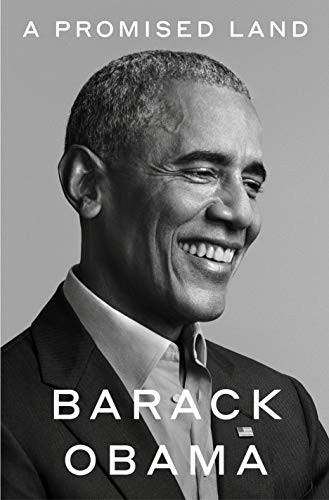
Talk to A Promised Land like its author wrote you back.
Get the ideas that fit your life — not generic summaries.
- Chat with the book
- Audiobook-style main ideas
- Adapts to your life and goals
- Helps you take action
A Promised Land, in detail
A Promised Land is the first volume of Barack Obama's presidential memoirs, covering his 2008 campaign through the first two and a half years of his presidency, ending with the killing of Osama bin Laden in May 2011. At around 700 pages it is one of the longest presidential memoirs in American history, and that length is largely deliberate — Obama uses the space not to produce a triumphant narrative but to work through the gap between what he hoped to accomplish and what the system allowed. The result is unusually honest about power: what it can do, what it can't, and what it costs.
The campaign section traces the long arc from Obama's early Senate years through the Iowa caucus, the long primary against Hillary Clinton, and the general election. Obama is reflective about the particular position he occupied — needing to be acceptable to white moderate voters while representing something genuine to Black voters — and about the compromises that required. He describes the first moment he understood he might actually win, and the weight that understanding carried before it produced anything like confidence.
The presidency sections cover the 2008 financial crisis, the passage of the Affordable Care Act, the wars in Iraq and Afghanistan, and a string of foreign policy decisions including the Libyan intervention and the Arab Spring. What emerges is a portrait of governance as constraint management: dealing with a Republican opposition that decided early in his term to block everything regardless of merit, a Democratic caucus that was fractious and difficult to hold, and a federal bureaucracy that moved slowly even when it agreed with him. The healthcare fight alone consumed a year of political capital and required several late-night calls to wavering senators that Obama describes in granular, sometimes painful detail.
The book's final sections build toward the bin Laden raid, which Obama uses as a lens for exploring the ethics and psychology of executive decision-making — ordering lethal action with imperfect intelligence on behalf of a country that expected certainty. His account of the night before and the day of the raid is among the more psychologically honest passages in the memoir literature of the presidency. The book closes with the raid's success, but without triumphalism — Obama knows what has and hasn't changed.
The big ideas
- 1.
Presidential power operates largely through persuasion and coalition management, not command. Obama describes nearly every major policy as requiring individual negotiation with specific senators and representatives.
- 2.
The financial crisis response was constrained by what the law permitted and what the public would accept, not just by what economists said was optimal. Political economy shapes policy choices as much as economic theory.
- 3.
The Affordable Care Act passed because Obama decided to spend political capital on it despite warnings that it would cost him the midterms — and it did. He presents this as a judgment about what the presidency was for.
