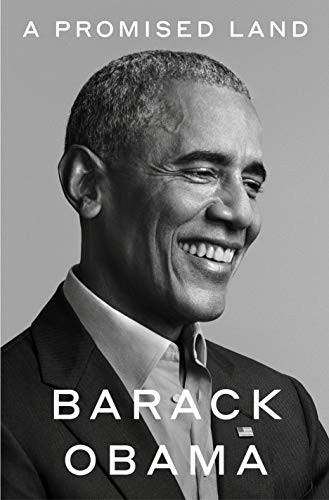
A Promised Land by Barack Obama is a 2020 memoir book about leadership, politics, decision-making. Presidential power operates largely through persuasion and coalition management, not command. Obama describes nearly every major policy as requiring individual negotiation with specific senators and representatives.
Summary
A Promised Land is the first volume of Barack Obama's presidential memoirs, covering his 2008 campaign through the first two and a half years of his presidency, ending with the killing of Osama bin Laden in May 2011. At around 700 pages it is one of the longest presidential memoirs in American history, and that length is largely deliberate — Obama uses the space not to produce a triumphant narrative but to work through the gap between what he hoped to accomplish and what the system allowed. The result is unusually honest about power: what it can do, what it can't, and what it costs.
The campaign section traces the long arc from Obama's early Senate years through the Iowa caucus, the long primary against Hillary Clinton, and the general election. Obama is reflective about the particular position he occupied — needing to be acceptable to white moderate voters while representing something genuine to Black voters — and about the compromises that required. He describes the first moment he understood he might actually win, and the weight that understanding carried before it produced anything like confidence.
The presidency sections cover the 2008 financial crisis, the passage of the Affordable Care Act, the wars in Iraq and Afghanistan, and a string of foreign policy decisions including the Libyan intervention and the Arab Spring. What emerges is a portrait of governance as constraint management: dealing with a Republican opposition that decided early in his term to block everything regardless of merit, a Democratic caucus that was fractious and difficult to hold, and a federal bureaucracy that moved slowly even when it agreed with him. The healthcare fight alone consumed a year of political capital and required several late-night calls to wavering senators that Obama describes in granular, sometimes painful detail.
The book's final sections build toward the bin Laden raid, which Obama uses as a lens for exploring the ethics and psychology of executive decision-making — ordering lethal action with imperfect intelligence on behalf of a country that expected certainty. His account of the night before and the day of the raid is among the more psychologically honest passages in the memoir literature of the presidency. The book closes with the raid's success, but without triumphalism — Obama knows what has and hasn't changed.
Talk to A Promised Land like its author wrote you back.
Get the ideas that fit your life — not generic summaries.
- Chat with the book
- Audiobook-style main ideas
- Adapts to your life and goals
- Helps you take action
Key takeaways
- 1.
Presidential power operates largely through persuasion and coalition management, not command. Obama describes nearly every major policy as requiring individual negotiation with specific senators and representatives.
- 2.
The financial crisis response was constrained by what the law permitted and what the public would accept, not just by what economists said was optimal. Political economy shapes policy choices as much as economic theory.
- 3.
The Affordable Care Act passed because Obama decided to spend political capital on it despite warnings that it would cost him the midterms — and it did. He presents this as a judgment about what the presidency was for.
- 4.
Managing intelligence is a distinct skill from analyzing it. Obama describes learning to ask the right questions of agencies that naturally tell presidents what they think they want to hear.
- 5.
The symbolic dimensions of the first Black presidency created expectations that intersected awkwardly with the constraints of governing. Obama was asked to represent something and simultaneously to manage it carefully.
- 6.
Foreign policy is mostly about managing relationships with leaders who have their own domestic political constraints. Understanding those constraints — rather than just issuing demands — is most of the work.
- 7.
The gap between campaign rhetoric and governing reality is partly structural. A candidate needs to be aspirational; a president needs to be specific about tradeoffs. Obama addresses this gap more honestly than most.
- 8.
The bin Laden decision required acting on intelligence that was estimated at 55 percent confidence. Obama describes accepting that executive decisions carry irreducible uncertainty that advisers and the public rarely fully acknowledge.
Discussion questions
Use these on your own, with a book club, or as chat starters in Superbook. Book club version, ready to copy or print →
- 1.
Obama describes choosing to fight for the ACA despite political advisers telling him it would cost him the midterms. How should a president weigh historical legacy against near-term political survival?
- 2.
He is explicit that the Republican decision to obstruct everything from 2009 onward fundamentally changed what was possible. Does the book offer any credible account of what could have been done differently?
- 3.
Obama's account of managing advisers like Rahm Emanuel and Tim Geithner raises questions about how much presidents are shaped by the people they choose around them. What does his staffing suggest about his own instincts?
- 4.
He writes about the particular burden of being the first Black president — being cautious in ways a white president wouldn't have needed to be. Was that caution wise, or did it cost too much?
- 5.
The financial crisis response largely protected banks and their creditors while leaving many homeowners to lose their homes. Obama presents this as a constrained choice. Do you find that account convincing?
- 6.
What does the book suggest about the limits of campaign promises as a guide to what a president can actually do once in office?
- 7.
Obama is careful to represent the views of people who disagreed with his decisions, including on Afghanistan and Libya. Does that fairness undercut the book's argument, or does it strengthen it?
- 8.
The book ends with the bin Laden raid. What does Obama's account of that decision reveal about his understanding of his own authority?
- 9.
A Promised Land is very long. Does the length feel like necessary depth to you, or is it partly self-justification?
- 10.
Obama describes several moments where he felt genuinely uncertain about what to do. Are those moments more or less reassuring about his presidency than confident decision-making would be?
- 11.
He writes about Michelle Obama's difficulties with the White House and with public life. What does that section suggest about the costs presidential ambition imposes on families?
- 12.
If Obama had written this book immediately after leaving office rather than three years later, what do you think would be different?
Themes
Frequently asked questions
-
Is A Promised Land worth reading?
Yes, if you have patience for its length and interest in presidential decision-making. It's more honest about the gap between aspiration and governance than most political memoirs. Readers who want a quick summary will find it slow; readers willing to spend time with it will find it substantive.
-
How long does it take to read A Promised Land?
The book is around 700 pages and takes roughly 18 to 22 hours at average reading pace. Many readers spread it over several weeks. The audiobook, read by Obama himself, runs about 29 hours.
-
What period does A Promised Land cover?
The book covers Obama's early political career, the 2008 campaign, and the first two and a half years of his presidency — through May 2011 and the killing of Osama bin Laden. A second volume covering the rest of his presidency has been announced but not yet published.
-
How does A Promised Land compare to Michelle Obama's Becoming?
They cover overlapping periods but from different positions. Becoming is more personal and emotional; A Promised Land is more political and process-oriented. Together they offer a more complete picture of the Obama presidency than either does alone.
-
Who should read A Promised Land?
Readers interested in American political history, the mechanics of presidential governance, or the first Black presidency in particular. It rewards readers with some background in the policy issues it covers — the ACA, the financial crisis, Afghanistan — who want to understand how decisions were actually made.
Similar books
Dreams from My Father: A Story of Race and Inheritance
Barack Obama
Becoming
Michelle Obama
Long Walk to Freedom
Nelson Mandela
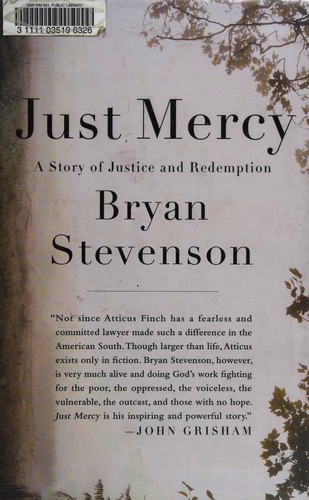
Just Mercy: A Story of Justice and Redemption
Bryan Stevenson
