Talk to A Random Walk Down Wall Street like its author wrote you back.
Get the ideas that fit your life — not generic summaries.
- Chat with the book
- Audiobook-style main ideas
- Adapts to your life and goals
- Helps you take action
What it argues
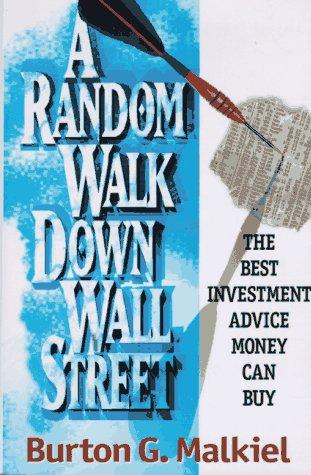
A Random Walk Down Wall Street is Burton Malkiel's argument that stock prices move in a way that is effectively unpredictable, that professional fund managers cannot consistently beat the market, and that the rational response for most investors is to buy and hold a diversified index fund. First published in 1973, the book has been revised and updated through multiple editions as markets have changed but its core thesis has remained intact.
The title comes from the random walk hypothesis: if stock prices already reflect all available information, then future price changes are essentially random. Past price patterns do not predict future movements. Malkiel tests this against two popular schools of thought — technical analysis, which looks for chart patterns, and fundamental analysis, which seeks to value companies based on earnings and growth. He finds both approaches wanting. Chart patterns don't hold up under scrutiny. And even skilled analysts who correctly identify undervalued companies face markets that quickly incorporate new information, leaving little edge.
What it gets right
- 1.
Stock prices follow something close to a random walk. Past price movements are not reliable predictors of future movements, despite what chart readers claim.
- 2.
Markets are broadly efficient. New information is incorporated into prices quickly, leaving little room for consistent outperformance through stock selection or timing.
- 3.
Actively managed funds, on average, underperform index funds after costs. The evidence for this has accumulated over decades and across markets.
What it covers
Who wrote it
Burton G. Malkiel is the Chemical Bank Chairman's Professor of Economics Emeritus at Princeton University and a former member of the Council of Economic Advisers. He has served on the boards of several major financial companies including Vanguard, where he worked alongside John Bogle. In addition to A Random Walk Down Wall Street, he has written The Elements of Investing with Charles Ellis and From Wall Street to the Great Wall, on Chinese markets. His advocacy for low-cost index investing over several decades predates the widespread adoption of index funds and helped shape how millions of ordinary investors manage their money.
