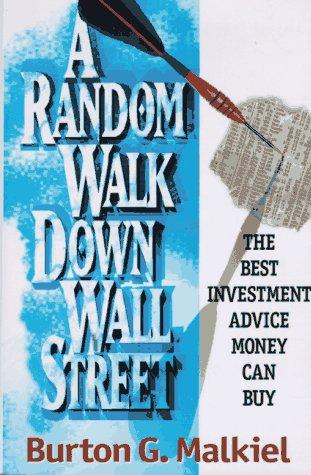
A Random Walk Down Wall Street by Burton G. Malkiel is a 1973 economics book about index investing, market efficiency, behavioral finance. Stock prices follow something close to a random walk. Past price movements are not reliable predictors of future movements, despite what chart readers claim.
Summary
A Random Walk Down Wall Street is Burton Malkiel's argument that stock prices move in a way that is effectively unpredictable, that professional fund managers cannot consistently beat the market, and that the rational response for most investors is to buy and hold a diversified index fund. First published in 1973, the book has been revised and updated through multiple editions as markets have changed but its core thesis has remained intact.
The title comes from the random walk hypothesis: if stock prices already reflect all available information, then future price changes are essentially random. Past price patterns do not predict future movements. Malkiel tests this against two popular schools of thought — technical analysis, which looks for chart patterns, and fundamental analysis, which seeks to value companies based on earnings and growth. He finds both approaches wanting. Chart patterns don't hold up under scrutiny. And even skilled analysts who correctly identify undervalued companies face markets that quickly incorporate new information, leaving little edge.
The empirical case is the book's backbone. Malkiel marshals decades of data showing that actively managed mutual funds, on average, trail the market after fees. A small number outperform in any given year, but persistence is weak — the funds that beat the market one decade rarely repeat the feat in the next. The explanation is not that fund managers are unintelligent; it's that they are competing against each other and against markets that incorporate information rapidly. The average result of active management is the market return minus costs.
Malkiel's prescription is simple: buy low-cost index funds that track broad market indices, keep costs as low as possible, diversify across asset classes and geographies, and rebalance periodically. The book also covers life-cycle investing — how the appropriate mix of stocks and bonds shifts as investors age — and gives practical guidance on taxes, annuities, and real estate. The later editions engage directly with behavioral finance, acknowledging that investors make systematic errors while arguing this doesn't change the core advice: most people are better served by indexing than by trying to exploit others' irrationality.
Talk to A Random Walk Down Wall Street like its author wrote you back.
Get the ideas that fit your life — not generic summaries.
- Chat with the book
- Audiobook-style main ideas
- Adapts to your life and goals
- Helps you take action
Key takeaways
- 1.
Stock prices follow something close to a random walk. Past price movements are not reliable predictors of future movements, despite what chart readers claim.
- 2.
Markets are broadly efficient. New information is incorporated into prices quickly, leaving little room for consistent outperformance through stock selection or timing.
- 3.
Actively managed funds, on average, underperform index funds after costs. The evidence for this has accumulated over decades and across markets.
- 4.
Buy low-cost index funds that track broad market benchmarks. The savings on fees compound significantly over a long investment horizon.
- 5.
Diversify across asset classes, sectors, and geographies. Diversification reduces risk without sacrificing expected returns.
- 6.
Life-cycle investing means shifting gradually from stocks to bonds as retirement approaches. Young investors can tolerate more volatility; older investors need more stability.
- 7.
Behavioral biases cause investors to buy high and sell low, chase past performance, and overtrade. Knowing this doesn't fix it — the structural solution is an automatic investment plan you don't tamper with.
- 8.
The long-run real return of equities has historically justified the volatility. Stocks are risky in the short run and much less risky over decades.
Discussion questions
Use these on your own, with a book club, or as chat starters in Superbook. Book club version, ready to copy or print →
- 1.
Malkiel's random walk argument implies that your stock picks are essentially guesses. Have you ever made a stock pick that worked? Looking back, how much of it was skill and how much was luck?
- 2.
The book has been updated many times since 1973 without changing its core message. What would have to be true about markets for Malkiel's advice to stop being correct?
- 3.
If you already hold index funds, what convinced you to do so? If you don't, what's your argument against the strategy?
- 4.
Active fund managers are intelligent, hardworking, and have access to enormous resources. Malkiel's case is that this doesn't help them beat the market. What does that say about the nature of competition in financial markets?
- 5.
Malkiel acknowledges behavioral finance but argues it doesn't change his recommendation to index. Do you think the existence of irrational investors creates exploitable opportunities, or does competition eliminate those opportunities too quickly?
- 6.
The book recommends rebalancing your portfolio periodically. How do you actually feel when you rebalance — when you sell what's done well and buy what hasn't? What does that feeling tell you about your investing psychology?
- 7.
Malkiel distinguishes between risk tolerance and risk capacity — what you can emotionally handle versus what your financial situation actually requires. How do those two things differ in your own life right now?
- 8.
What percentage of your investments are in actively managed funds versus index funds? If you're heavily in active funds, what would you have to believe for that to be the right choice?
- 9.
The book argues that past fund performance doesn't predict future performance. Have you ever chosen an investment because of its recent track record? How did that work out?
- 10.
Malkiel covers real estate as part of a diversified portfolio. How do you think about your home — as an investment, as consumption, or as something in between?
- 11.
The life-cycle investing framework says young people should hold mostly stocks and shift toward bonds as they age. Is your current allocation consistent with where you are in that framework?
- 12.
What is the hardest part of index investing, psychologically, during a market crash? Have you actually held through a significant downturn, or did you make changes?
Themes
Frequently asked questions
-
Is A Random Walk Down Wall Street still relevant?
Yes. The core argument — that markets are broadly efficient and that low-cost index funds beat most active managers over time — has only gained empirical support since the first edition. The later editions engage with behavioral finance and newer products like ETFs, keeping the practical advice current.
-
How long does it take to read A Random Walk Down Wall Street?
Around six to seven hours for the roughly 400-page book. The early chapters making the theoretical case are the densest; the later chapters on portfolio construction and life-cycle investing are more practical and read faster.
-
What is the main argument of A Random Walk Down Wall Street?
That stock prices are unpredictable enough that the average investor cannot beat the market through stock picking or market timing, and that the rational strategy is to buy and hold diversified, low-cost index funds rather than pay fees to active managers who don't earn them.
-
Who should not read A Random Walk Down Wall Street?
Readers looking for guidance on individual stock selection will find the book actively hostile to their project. Malkiel's case is that stock picking is mostly futile, so if you are committed to that approach, the book will frustrate rather than help you. Professional traders and hedge fund managers operate in a different context than the book addresses.
-
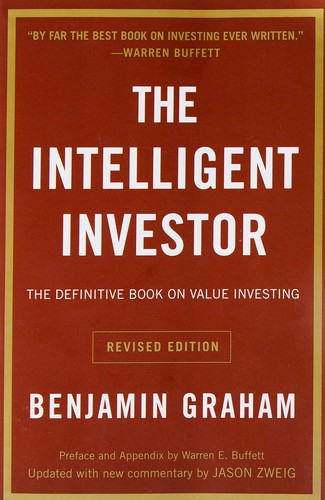
What's the difference between this book and The Intelligent Investor?
Graham argues that patient, disciplined investors can beat the market by buying undervalued stocks with a margin of safety. Malkiel argues they probably can't, because markets are efficient enough to eliminate the edge. They represent opposite ends of the active-vs-passive debate. Most serious investors should read both.