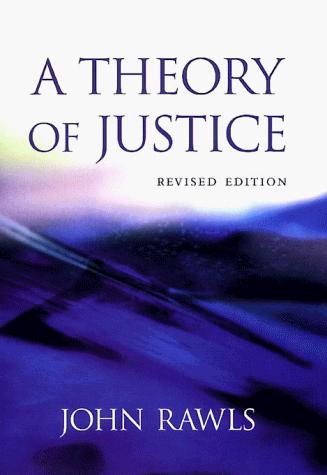
Talk to A Theory of Justice like its author wrote you back.
Get the ideas that fit your life — not generic summaries.
- Chat with the book
- Audiobook-style main ideas
- Adapts to your life and goals
- Helps you take action
What it argues
A Theory of Justice, published in 1971, is John Rawls's attempt to construct a systematic alternative to utilitarianism in political philosophy. The book argues that a just society is one whose basic institutions could be chosen by rational agents behind a "veil of ignorance" — a thought experiment in which no one knows their place in society, their class, their natural abilities, or even their conception of the good. Rawls calls this the "original position," and argues that from behind the veil, rational persons would choose two principles: first, that everyone has equal basic liberties; second, that inequalities are only permissible if they are arranged to benefit the least advantaged members of society.
The second principle — the difference principle — is the book's most contested contribution. It doesn't demand strict equality, but it does demand that inequalities be justified from the perspective of those worst off. A society may permit doctors to earn more than custodians, but only if the arrangement, through training incentives and productivity, leaves the least advantaged better off than a more egalitarian alternative would. This is not charity but structural justice: the basic institutions of society are to be arranged according to what those who gain least from them could rationally accept.
What it gets right
- 1.
The original position and veil of ignorance: just principles are those that rational agents would choose if they did not know their place in the distribution of natural talents, wealth, or social position.
- 2.
Rawls's first principle of justice requires equal basic liberties for all — freedom of speech, conscience, assembly, and the rule of law — and these cannot be traded off against economic advantages.
- 3.
The difference principle holds that social and economic inequalities are just only if they benefit the least advantaged members of society. Inequality must be justified from below, not above.
What it covers
Who wrote it
John Rawls (1921–2002) was an American moral and political philosopher who spent most of his career at Harvard University. A Theory of Justice, his first book, transformed liberal political philosophy and generated decades of responses, extensions, and objections. His later works, Political Liberalism and The Law of Peoples, revised and extended his account of justice in light of criticism. Rawls also wrote Justice as Fairness: A Restatement, which provides a more accessible condensed version of his mature position for readers deterred by the length and technicality of the original.
