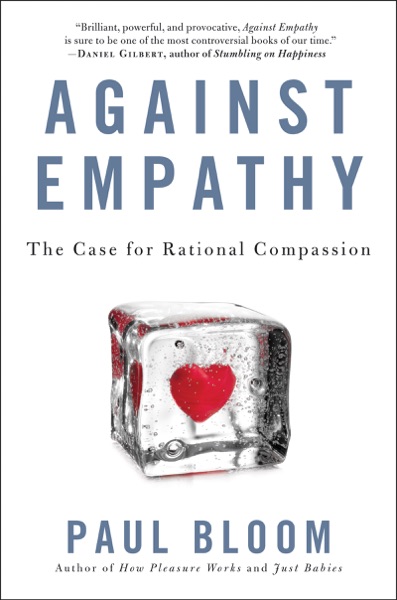
Talk to Against Empathy: The Case for Rational Compassion like its author wrote you back.
Get the ideas that fit your life — not generic summaries.
- Chat with the book
- Audiobook-style main ideas
- Adapts to your life and goals
- Helps you take action
Against Empathy: The Case for Rational Compassion, in detail
Paul Bloom's argument is not that we should care less about others. It is that empathy — feeling what another person feels — is a poor guide to caring well. Empathy is biased, innumerate, and parochial. It responds to the one over the many, the vivid over the statistical, the proximate over the distant, and the similar over the unfamiliar. These biases lead us to make worse moral decisions than we would if we replaced empathic feeling with rational compassion — a broader, cooler concern for others' welfare that can be directed by evidence rather than emotional salience.
Bloom draws a sharp distinction between empathy and compassion. Empathy is feeling someone else's pain; compassion is caring about their welfare and wanting to help. The two can come apart. Doctors who score high on affective empathy — who feel patients' distress as their own — show higher burnout rates and no better patient outcomes than those who score lower. Therapists who maintain emotional distance while caring genuinely about clients tend to produce better results. Firefighters, emergency responders, and surgeons benefit from calm concern, not from sharing the panic or agony of the people they're helping.
The political and policy implications are substantial. Empathy-based responses to crisis tend to favor named individuals over larger populations, recent and visible suffering over chronic structural problems, and in-group members over outgroups. Wars have been started because a charismatic figure directed public empathy toward a victim story. Effective altruism — the movement to direct charitable giving toward causes that do the most good per dollar — operates explicitly against empathic intuitions by insisting that statistical children count the same as the ones with faces and names.
Bloom is aware that the book's title is inflammatory and addresses the objection that opposing empathy makes someone sound cold. His position is that we need more precision about what kind of caring leads to better outcomes. Rational compassion is not indifference; it is caring efficiently and fairly. The book is more persuasive in its diagnosis of empathy's failures than in its account of what rational compassion looks like in practice, but as an argument against elevating empathy to a moral ideal, it is one of the more challenging recent books in popular psychology.
The big ideas
- 1.
Empathy and compassion are not the same. Empathy means feeling another's emotion; compassion means caring about their welfare. They are dissociable and empathy often leads to worse outcomes.
- 2.
Empathy is numerically blind. It responds far more powerfully to one identified individual than to a hundred statistical victims, which makes it a systematically misleading guide to where we should direct our moral effort.
- 3.
Empathy is biased toward the similar, the proximate, and the vivid. This reinforces in-group favoritism and makes it harder, not easier, to extend moral concern to distant or unfamiliar people.
