Talk to Atlas of the Heart like its author wrote you back.
Get the ideas that fit your life — not generic summaries.
- Chat with the book
- Audiobook-style main ideas
- Adapts to your life and goals
- Helps you take action
Atlas of the Heart, in detail
Atlas of the Heart is Brené Brown's attempt to map eighty-seven distinct human emotions and experiences — not as a clinical taxonomy but as a practical vocabulary for people who want to communicate more precisely about what they feel. Brown's premise, backed by her qualitative research with thousands of participants, is that most people use a handful of words (sad, anxious, angry, fine) to describe an enormous range of internal states, and that this poverty of language limits their ability to understand themselves and connect with others.
The book is organized around clusters of related emotions that are frequently confused: envy and jealousy, for example, or awe and wonder, or grief and sadness. For each cluster, Brown gives a definition, distinguishes between the concepts, and draws on research and her own clinical experience to illustrate where the confusion leads us astray. The section on shame and guilt alone has changed how many readers think about their own responses to failure — shame is about identity ("I am bad") while guilt is about behavior ("I did something bad"), and the distinction turns out to matter enormously for how people recover.
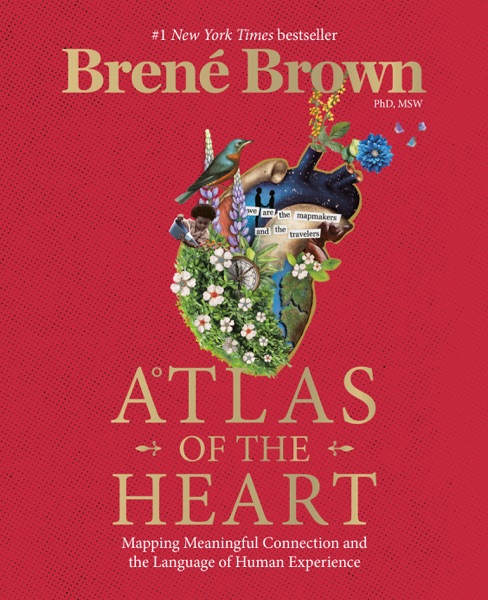
This is an unusually visual Brown book: the hardcover and audiobook companion were designed to be read together, with photographs, illustrations, and graphic layouts that reinforce the emotional texture of each section. The writing is warmer and more personal than her research-heavy earlier books, drawing on stories from her own life and her work with therapy clients. The ambition is high — cataloguing human emotional experience risks being either too clinical or too vague — but Brown's approach of staying close to specific situations and quoted language keeps it grounded.
Whether the book changes behavior depends on how much a reader is willing to practice the vocabulary. Knowing the difference between foreboding joy and anxiety, or between comparative suffering and empathy, is only useful if you apply it when it matters. Some critics note that the sheer number of emotions covered can feel overwhelming, and that the book is better read section by section than cover to cover. But as a reference work for emotional life — something to return to when stuck on what you're actually feeling — it has few rivals.
The big ideas
- 1.
Most people use fewer than three words to describe their emotional states. Expanding emotional vocabulary is not just about precision — it directly improves the ability to regulate emotions and connect with others.
- 2.
Shame and guilt are not interchangeable. Shame says 'I am bad'; guilt says 'I did something bad.' Shame corrodes connection; guilt, if handled well, can restore it.
- 3.
Envy is about wanting what someone else has; jealousy is about fear of losing something you already have to someone else. The distinction changes how you should respond.
