Talk to Authentic Leadership like its author wrote you back.
Get the ideas that fit your life — not generic summaries.
- Chat with the book
- Audiobook-style main ideas
- Adapts to your life and goals
- Helps you take action
Authentic Leadership, in detail
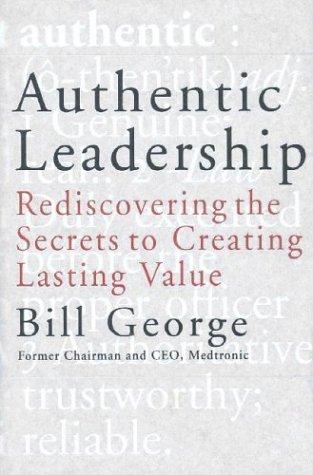
Authentic Leadership arrived in 2003 in the aftermath of Enron, WorldCom, and the first wave of corporate governance scandals. Bill George, then stepping down as CEO of Medtronic, wrote it as both a diagnosis and a prescription. His argument is that leadership failures at major companies stemmed not from lack of intelligence or strategy, but from leaders who had disconnected from their values — who were performing leadership rather than living it.
George defines authentic leaders by five characteristics: having a clear purpose, practicing solid values, leading with heart, establishing connected relationships, and demonstrating self-discipline. These aren't purely personal virtues — he argues they translate directly into organizational outcomes. Companies led by people who know why they lead, and who hold that purpose consistently under pressure, outperform those led by people optimizing for stock price and compensation.
The book is part framework and part memoir. George draws heavily on his tenure at Medtronic, where the company's mission — "restoring people to full life and health" — served as a consistent reference point for strategic decisions. That specificity makes the leadership model more grounded than most: it's not an abstract ideal but a description of how a particular leader navigated real pressure over time.
The weakness is that the book can feel prescriptive in a way that doesn't account for how hard authentic leadership is to sustain in practice. George acknowledges the difficulty but stays optimistic. His later book, True North, develops the model further and adds more interview evidence. Authentic Leadership is most useful as a starting point — a compact statement of a thesis that the sequel then substantially expands.
The big ideas
- 1.
Corporate governance failures often aren't strategic errors — they're the result of leaders who drifted from their values under external pressure and never noticed the drift.
- 2.
Authentic leaders lead from a genuine sense of purpose, not from a desire for status, wealth, or power. Purpose is what sustains consistent decision-making over time.
- 3.
The five dimensions of authentic leadership: purpose, values, heart, relationships, and self-discipline. These aren't soft qualities — they predict hard organizational outcomes.
