Authentic Leadership by Bill George is a 2003 business book about authentic leadership, purpose, values. Corporate governance failures often aren't strategic errors — they're the result of leaders who drifted from their values under external pressure and never noticed the drift.
Summary
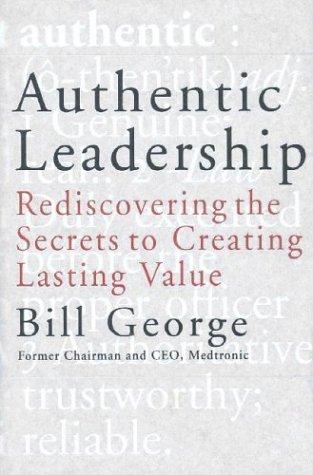
Authentic Leadership arrived in 2003 in the aftermath of Enron, WorldCom, and the first wave of corporate governance scandals. Bill George, then stepping down as CEO of Medtronic, wrote it as both a diagnosis and a prescription. His argument is that leadership failures at major companies stemmed not from lack of intelligence or strategy, but from leaders who had disconnected from their values — who were performing leadership rather than living it.
George defines authentic leaders by five characteristics: having a clear purpose, practicing solid values, leading with heart, establishing connected relationships, and demonstrating self-discipline. These aren't purely personal virtues — he argues they translate directly into organizational outcomes. Companies led by people who know why they lead, and who hold that purpose consistently under pressure, outperform those led by people optimizing for stock price and compensation.
The book is part framework and part memoir. George draws heavily on his tenure at Medtronic, where the company's mission — "restoring people to full life and health" — served as a consistent reference point for strategic decisions. That specificity makes the leadership model more grounded than most: it's not an abstract ideal but a description of how a particular leader navigated real pressure over time.
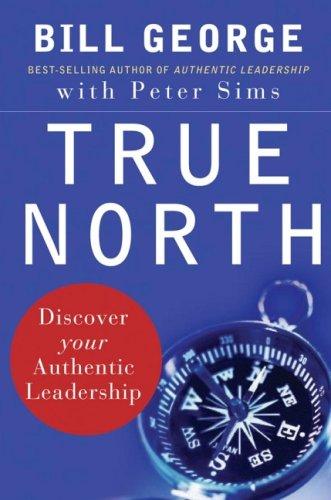
The weakness is that the book can feel prescriptive in a way that doesn't account for how hard authentic leadership is to sustain in practice. George acknowledges the difficulty but stays optimistic. His later book, True North, develops the model further and adds more interview evidence. Authentic Leadership is most useful as a starting point — a compact statement of a thesis that the sequel then substantially expands.
Talk to Authentic Leadership like its author wrote you back.
Get the ideas that fit your life — not generic summaries.
- Chat with the book
- Audiobook-style main ideas
- Adapts to your life and goals
- Helps you take action
Key takeaways
- 1.
Corporate governance failures often aren't strategic errors — they're the result of leaders who drifted from their values under external pressure and never noticed the drift.
- 2.
Authentic leaders lead from a genuine sense of purpose, not from a desire for status, wealth, or power. Purpose is what sustains consistent decision-making over time.
- 3.
The five dimensions of authentic leadership: purpose, values, heart, relationships, and self-discipline. These aren't soft qualities — they predict hard organizational outcomes.
- 4.
Mission statements mean nothing if they don't constrain actual decisions under pressure. Medtronic's mission was tested in cost-cutting discussions; authentic leadership means the mission wins.
- 5.
Leaders who don't know themselves tend to lead in ways that serve their own needs — for recognition, control, or safety — rather than the organization's needs.
- 6.
Stakeholder balance — serving employees, customers, shareholders, and communities — produces better long-run results than shareholder primacy, even by the shareholders' own measure.
- 7.
The gap between espoused values and practiced values destroys trust faster than any single visible failure. Employees notice the gap immediately.
Discussion questions
Use these on your own, with a book club, or as chat starters in Superbook. Book club version, ready to copy or print →
- 1.
George argues the Enron and WorldCom leaders weren't bad people who made bad choices — they were disconnected from their values. Does that framing feel generous or accurate to you?
- 2.
What is your own purpose for leading? If you can't state it in two sentences, what would you need to examine to find it?
- 3.
Think of a decision at work where financial pressure and your stated values pointed in different directions. Which won, and what did that reveal?
- 4.
George's model says self-discipline — the ability to behave consistently — matters as much as having the right values. Where is your consistency weakest?
- 5.
He argues stakeholder balance produces better outcomes than shareholder primacy. What's the evidence from your own experience for or against that claim?
- 6.
The book was written after major corporate scandals. Do you think the structural conditions that produced those failures have improved, or just changed form?
- 7.
Which of the five characteristics of authentic leadership — purpose, values, heart, relationships, self-discipline — would your direct reports say you're best at? Worst at?
- 8.
George says authentic leaders lead with heart — they genuinely care about the people they work with. What would leading with more heart look like in your specific context?
- 9.
When did you last receive honest critical feedback from someone who reports to you? What made that possible or unlikely?
- 10.
Authentic leadership requires knowing yourself. What's one thing that's true about how you lead that you don't often say out loud?
- 11.
The gap between who leaders are at work and who they are outside work often signals inauthenticity. Does that gap exist for you, and what drives it?
Themes
Frequently asked questions
-
What is Authentic Leadership about?
Bill George argues that the corporate scandals of the early 2000s resulted from leaders who had disconnected from their values. The book proposes a five-part framework for authentic leadership — purpose, values, heart, relationships, and self-discipline — drawn from George's experience running Medtronic.
-
Is Authentic Leadership or True North the better book?
True North (2007) is the more developed and evidence-rich book. Authentic Leadership is shorter and more personal, and works well as an introduction. If you only read one, read True North. If you're already interested in George's model, Authentic Leadership adds personal depth the sequel doesn't replicate.
-
How long does Authentic Leadership take to read?
About four hours at average pace. At roughly 240 pages it's shorter than most leadership books, and the writing is clear and anecdote-driven. You can read it in a weekend.
-
Who should read Authentic Leadership?
Leaders who suspect a gap between who they are and how they lead, and who want a framework that goes deeper than competency models or skill checklists. Especially relevant for anyone in or preparing for senior roles.
-
Does the book offer practical tools?
The companion workbook (sold separately) has exercises, but the main book is primarily conceptual and narrative. The value is in the framework and the case studies, not in step-by-step instructions.