Talk to Beating the Street like its author wrote you back.
Get the ideas that fit your life — not generic summaries.
- Chat with the book
- Audiobook-style main ideas
- Adapts to your life and goals
- Helps you take action
Beating the Street, in detail
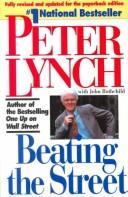
Beating the Street is Peter Lynch's second book, written after he retired from the Fidelity Magellan Fund in 1990. Where One Up On Wall Street laid out his investment philosophy in general terms, Beating the Street is more specific: Lynch walks through actual stocks he owned or researched, explains his reasoning at the time of purchase, and revisits which decisions worked out and which didn't. It is part investment memoir, part ongoing tutorial in how he actually thought about individual companies.
Lynch begins by describing the circumstances of his retirement — at 46, he decided that running one of the world's largest mutual funds was consuming more of his life than he wanted to give it — and then moves into the analytical work. A significant portion of the book covers the stocks he researched for a mock portfolio exercise he did for Barron's magazine, which lets him show the actual analytical process in real time rather than reconstructed afterward.
The stock-picking framework from the first book recurs here but with more specific application. Lynch explains why he likes certain industries and not others, how he evaluates local real estate investment trusts (REITs) and savings and loan stocks, how to read the annual reports of banks and cyclicals, and what financial metrics to monitor across different sector types. The coverage of financial stocks — banks, insurance companies, savings institutions — is particularly detailed and was relevant to the thrift crisis period in which the book was written.
The book also addresses fund investing directly, which the first book largely avoided. Lynch gives guidance on how to evaluate mutual funds: look for consistent long-term performance rather than recent results, check turnover and costs, understand the fund's actual strategy rather than its marketing description, and pay attention to how the manager behaved during down markets. The combination of stock-picking detail and fund-evaluation guidance makes the book a useful complement to the first.
The big ideas
- 1.
Annual reports tell you what a company actually did, not what it hoped to do. Reading them carefully, especially the footnotes, reveals information that most investors miss.
- 2.
Different industries require different analytical frameworks. The metrics that matter for a bank are completely different from the metrics that matter for a retailer or a pharmaceutical company.
- 3.
Lynch's portfolio review is deliberately honest about mistakes. Good investors make bad picks regularly; the goal is that the winners outrun the losers, not that every pick succeeds.
