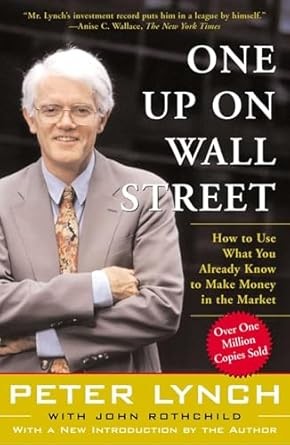
Beating the Street by Peter Lynch is a 1993 economics book about stock picking, mutual fund management, research process. Annual reports tell you what a company actually did, not what it hoped to do. Reading them carefully, especially the footnotes, reveals information that most investors miss.
Summary
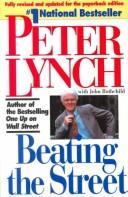
Beating the Street is Peter Lynch's second book, written after he retired from the Fidelity Magellan Fund in 1990. Where One Up On Wall Street laid out his investment philosophy in general terms, Beating the Street is more specific: Lynch walks through actual stocks he owned or researched, explains his reasoning at the time of purchase, and revisits which decisions worked out and which didn't. It is part investment memoir, part ongoing tutorial in how he actually thought about individual companies.
Lynch begins by describing the circumstances of his retirement — at 46, he decided that running one of the world's largest mutual funds was consuming more of his life than he wanted to give it — and then moves into the analytical work. A significant portion of the book covers the stocks he researched for a mock portfolio exercise he did for Barron's magazine, which lets him show the actual analytical process in real time rather than reconstructed afterward.
The stock-picking framework from the first book recurs here but with more specific application. Lynch explains why he likes certain industries and not others, how he evaluates local real estate investment trusts (REITs) and savings and loan stocks, how to read the annual reports of banks and cyclicals, and what financial metrics to monitor across different sector types. The coverage of financial stocks — banks, insurance companies, savings institutions — is particularly detailed and was relevant to the thrift crisis period in which the book was written.
The book also addresses fund investing directly, which the first book largely avoided. Lynch gives guidance on how to evaluate mutual funds: look for consistent long-term performance rather than recent results, check turnover and costs, understand the fund's actual strategy rather than its marketing description, and pay attention to how the manager behaved during down markets. The combination of stock-picking detail and fund-evaluation guidance makes the book a useful complement to the first.
Talk to Beating the Street like its author wrote you back.
Get the ideas that fit your life — not generic summaries.
- Chat with the book
- Audiobook-style main ideas
- Adapts to your life and goals
- Helps you take action
Key takeaways
- 1.
Annual reports tell you what a company actually did, not what it hoped to do. Reading them carefully, especially the footnotes, reveals information that most investors miss.
- 2.
Different industries require different analytical frameworks. The metrics that matter for a bank are completely different from the metrics that matter for a retailer or a pharmaceutical company.
- 3.
Lynch's portfolio review is deliberately honest about mistakes. Good investors make bad picks regularly; the goal is that the winners outrun the losers, not that every pick succeeds.
- 4.
REITs and financial stocks were dramatically undervalued during the thrift crisis. Being willing to buy what everyone else fears is how significant returns get made.
- 5.
When evaluating a mutual fund, performance over a full market cycle matters more than recent results. Check whether the manager actually outperformed through a downturn.
- 6.
Institutional investors are often forced by mandate or career risk to avoid the most attractive opportunities. Individual investors who can act without those constraints have a genuine edge.
- 7.
Lynch's 'perfect stock' criteria — low institutional ownership, boring name, slow growth industry, company that has something going for it that analysts ignore — identify opportunities before they become obvious.
- 8.
Turnover is a proxy for conviction. High turnover in a mutual fund often indicates the manager lacks the patience that long-term outperformance requires.
Discussion questions
Use these on your own, with a book club, or as chat starters in Superbook. Book club version, ready to copy or print →
- 1.
Lynch describes why he retired at 46 despite running one of the world's most successful funds. What would you give up to do work you find this meaningful, and what threshold would prompt you to stop?
- 2.
The book was written during a period when savings and loan stocks were deeply unpopular. Lynch saw this as an opportunity. What asset class or sector is deeply unloved today that might present similar opportunity?
- 3.
Lynch is explicit about his losers as well as his winners. How does your own record of investment decisions look when you include the failures alongside the successes?
- 4.
The financial stock analysis section is detailed and somewhat dated. Does the analytical framework — looking for asset quality problems, reserve levels, spread dynamics — translate to evaluating financial institutions today?
- 5.
Lynch's Barron's portfolio exercise lets you see his research process in real time. What is your own research process before a major investment, and does it have similar depth?
- 6.
The book argues that individual investors can beat professionals by acting without institutional constraints. In what specific situations do you think that advantage actually applies to your own investing?
- 7.
Lynch discusses fund evaluation criteria: long-term performance, low turnover, consistent strategy. How do the funds in your portfolio actually measure against those criteria?
- 8.
Lynch retired from active management at peak performance. Most investors, by contrast, tend to double down when things are going well. What drives the difference in behavior?
- 9.
The stock-picking process Lynch describes requires sustained attention — reading annual reports, tracking news, monitoring financial metrics. How much time per week do you realistically devote to your investments?
- 10.
Lynch's approach is concentrated and conviction-driven. Does your current portfolio reflect genuine conviction in your holdings, or do you hold positions you no longer feel confident about?
- 11.
The book focuses heavily on the early 1990s recession and thrift crisis. Does the historical context make it harder to extract general principles, or does the crisis context illuminate principles that only become clear under stress?
- 12.
Lynch says the best time to buy stocks is when people are most afraid. When was the last time you bought into broad market fear rather than selling or staying on the sidelines?
Themes
Frequently asked questions
-
Should I read Beating the Street before One Up On Wall Street?
No. Beating the Street assumes familiarity with Lynch's framework from One Up On Wall Street. Read the first book first — it establishes the philosophy and vocabulary. Beating the Street then applies and extends those ideas with specific examples and more industry-specific analysis.
-
What is unique about Beating the Street compared to the first book?
It is more specific and more honest about the actual research process. Lynch shows his work on individual stocks, including the ones that didn't pan out. The financial stock analysis section is more detailed than anything in the first book, and the fund-evaluation guidance is entirely new.
-
Is the stock analysis in Beating the Street still usable today?
The analytical frameworks hold up; the specific examples are dated. Lynch's approach to reading annual reports, identifying cheap financials, and evaluating management credibility translates to current companies. The specific thrift-crisis stocks he discusses are historical.
-
What is Lynch's advice on mutual fund selection?
Look for consistent long-term performance over a full market cycle, not recent performance. Check turnover rates — high turnover often indicates lack of conviction. Understand the fund's actual strategy, not its marketing language. Look at how the manager behaved during a down market, which reveals more than behavior during good years.
-
Does Beating the Street apply to index fund investors?
Less directly than to individual stock pickers. The book is written for investors who actively research individual stocks and want to understand how a professional approached the process. Index investors will find the behavioral chapters more applicable than the stock-analysis chapters.