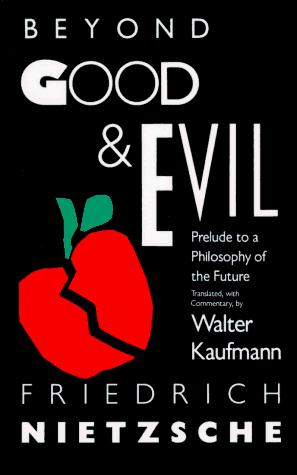
Talk to Beyond Good and Evil like its author wrote you back.
Get the ideas that fit your life — not generic summaries.
- Chat with the book
- Audiobook-style main ideas
- Adapts to your life and goals
- Helps you take action
Beyond Good and Evil, in detail
Beyond Good and Evil is Nietzsche's assault on the philosophical tradition he had been trained in and had grown to distrust. Published in 1886, it reads as a critique of virtually every major thinker from Plato to Kant, and more broadly as an attack on the moral assumptions of 19th-century European culture. The title is programmatic: Nietzsche does not claim that good and evil don't exist, but that the opposition has been set up badly and needs to be broken apart before something more honest can emerge.
The book opens with Nietzsche questioning the will to truth itself. Why do we assume that truth is more valuable than illusion? Philosophers have smuggled in prejudices — about the value of consciousness, the reliability of introspection, the priority of altruism — and then called the results objective. Nietzsche calls this "dogmatism" and credits Plato as its founding figure. Much of the book is a catalog of how philosophers mistake their own drives and perspectives for universal truths.
The concept of the will to power runs through the work as a replacement for simpler notions of self-interest or pleasure-seeking. Life, on Nietzsche's view, is not primarily about self-preservation but about self-overcoming — the drive to discharge, expand, and impose form on material both internal and external. Morality, particularly the Christian-descended morality of pity and equality, is diagnosed as a will to power in disguise: the weak imposing their values on the strong by calling weakness "virtue."
The book's most famous sections concern the contrast between master morality and slave morality. Masters create values from a position of strength; slaves react to their masters by inverting the hierarchy and calling their own powerlessness "goodness." Nietzsche doesn't think modern Europeans are masters — he thinks the slave revolt in morality won, definitively, and that the task now is to think past that victory. Whether he offers a convincing alternative or merely a diagnosis remains one of the most contested questions in the entire philosophical tradition.
The big ideas
- 1.
Philosophers' seemingly objective truths are often rationalizations of personal drives, cultural biases, and unexamined prejudices dressed in logical form.
- 2.
The will to power is not the desire to dominate others but a fundamental drive toward growth, discharge of energy, and self-overcoming.
- 3.
Master morality values strength, nobility, and the capacity to create values; slave morality values meekness, pity, and equality as reactive inversions of powerlessness.
