Talk to Big Little Lies like its author wrote you back.
Get the ideas that fit your life — not generic summaries.
- Chat with the book
- Audiobook-style main ideas
- Adapts to your life and goals
- Helps you take action
Big Little Lies, in detail
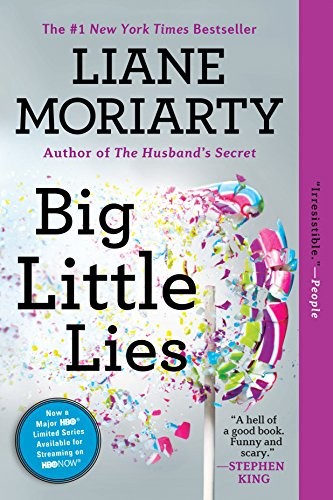
Big Little Lies begins with a death at a school trivia night and then spends its entire length working backward to explain how it happened. Three women — Madeline, a sharp-tongued divorcee remarried with a complicated family; Celeste, a beautiful former lawyer married to a very wealthy man; and Jane, a single mother new to the tight social world of the Pirriwee school community — are drawn together and drawn apart by the pressures of suburban parenthood, class competition, and the very different secrets each of them is carrying.
The book is a thriller in structure but a domestic novel in texture. Moriarty is interested in what women perform for each other and for the social institutions — school fundraisers, kindergarten orientation, the playground politics of five-year-olds — that organize their days. The humor is sharp and the social observation is accurate enough to make many readers uncomfortable in a productive way. But beneath the comedy and the warmth between the three principals, the novel is building toward something genuinely dark: the reality of intimate partner violence that hides in plain sight behind money, beauty, and social status.
What Moriarty does structurally is clever: the novel is told partly through retrospective interview fragments — police interviews after the incident — that create dramatic irony while keeping the central mystery intact. The community gossip chorus is both comic and a form of social critique: these voices believe they know what's happening and are reliably, consistently wrong about what actually matters. The technique lets Moriarty be funny and unsettling in the same breath.
Big Little Lies is better than its beach-read reputation suggests and not quite as deep as the prestige TV adaptation made it seem. It is very good at what it does — building community, escalating tension, and making the reader feel both complicit in and critical of social performance. The central darkness lands hard because it arrives through a recognizably real character, not a plot device. Readers who want psychological complexity alongside accessible pacing will find this more than satisfying.
The big ideas
- 1.
Moriarty's central achievement is making Celeste's situation feel recognizable rather than alien — her combination of love, fear, shame, and rationalization is rendered with specific accuracy.
- 2.
The community gossip chorus functions as a Greek chorus that amplifies dramatic irony: they are confident and consistently wrong, which makes their confidence its own kind of social critique.
- 3.
Madeline's energy and irreverence make her the most fun character to spend time with, but her refusal to let anything go is also, quietly, a form of control.
