Talk to Bigger Leaner Stronger like its author wrote you back.
Get the ideas that fit your life — not generic summaries.
- Chat with the book
- Audiobook-style main ideas
- Adapts to your life and goals
- Helps you take action
Bigger Leaner Stronger, in detail
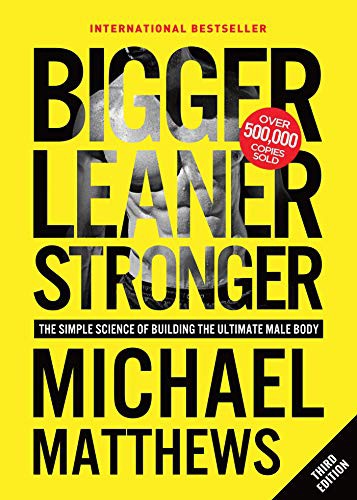
Bigger Leaner Stronger is Michael Matthews's practical guide to building a lean, muscular physique through evidence-based strength training and flexible dieting. First published in 2012 and now in its third edition, the book is aimed at men starting or restarting a serious training program and frustrated by the fitness industry's tendency to make simple things complicated and expensive. Matthews's central argument is that the fundamentals — progressive overload with compound movements, adequate protein, caloric control — are responsible for virtually all of the results that training produces, and that everything else is marginal at best.
The book opens with a debunking section covering the most common myths in fitness: that you need to train with high reps to get "toned," that doing cardio is necessary for fat loss, that you need supplements to make progress, that changing your workout constantly prevents plateaus, and that strength training is dangerous for joints. Matthews takes each myth through the scientific literature — the references are real and the citations are appropriate — and replaces them with evidence-based principles. This section is probably the most valuable for beginners who arrive at the gym with a head full of misinformation.
The training program is built around the "big three" compound lifts — squat, bench press, and deadlift — supplemented by overhead press, rows, and isolation work. The programming philosophy is heavy weight and low reps (four to six per set) to prioritize strength development and neuromuscular efficiency, with progression tracked systematically. Matthews argues, with support from strength science, that heavy compound training produces more muscle and less injury than the lighter, higher-volume approaches popular in commercial gyms.
The nutrition section covers protein targets (roughly one gram per pound of body weight), flexible dieting through calorie and macronutrient tracking, and the evidence (or lack of it) for specific supplements. Matthews's supplement recommendations are minimal — creatine, caffeine, and adequate micronutrients — and his skepticism of the supplement industry is unambiguous. The practical sections include detailed programming, a meal-planning framework, and troubleshooting for common stalls. The book is largely a no-frills practical manual, and its success reflects how much readers value the combination of evidence and specificity.
The big ideas
- 1.
Progressive overload — systematically increasing weight or volume over time — is the primary driver of muscle growth, and most other training variables are secondary.
- 2.
Heavy compound movements (squat, deadlift, bench, overhead press, row) produce more total muscle stimulation and more strength development than isolation machines and light, high-rep training.
- 3.
Caloric surplus for muscle building and caloric deficit for fat loss are the fundamental nutritional requirements — no specific food category or meal timing protocol overrides energy balance.
