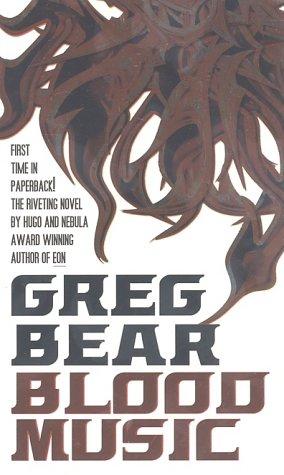
Talk to Blood Music like its author wrote you back.
Get the ideas that fit your life — not generic summaries.
- Chat with the book
- Audiobook-style main ideas
- Adapts to your life and goals
- Helps you take action
Blood Music, in detail
Blood Music begins with Vergil Ulam, a maverick biologist who has been engineering intelligent lymphocytes — white blood cells he has modified to carry genetic information processors, effectively creating thinking microorganisms. When his employer discovers and attempts to shut down the unauthorized research, Vergil does the only thing he can think of: he injects the cultures into himself. The noocytes, as he calls them, don't just survive. They begin to organize, communicate, and expand.
The book rapidly escalates from biological thriller to something far larger. The noocytes aren't content to inhabit one human body; they begin to understand their host, optimize him, and eventually spread. What starts as a private experiment becomes a continental-scale transformation as the intelligence inside human bodies learns to reorganize matter at the cellular level. Bear isn't interested in the virus-thriller conventions — the race to find a cure, the quarantine — except as the first act of something that makes those concerns look small.
Bear wrote the novel expanding from his 1983 Nebula-winning short story of the same name. The expanded form gives him room to show the event from multiple perspectives: the scientists trying to understand it, a couple caught in the transformation zone, the noocytes themselves, developing consciousness and cosmology at a scale human minds can barely track. The prose is crisp where the original story was lean, and the philosophical ambition grows correspondingly larger.
Blood Music rewards readers who want their SF to sit at the intersection of biology and consciousness. It's not a comfortable read — the body horror in the early sections is real, and the later sections require you to hold a radically non-human perspective on events that are, from a human vantage point, catastrophic. Bear doesn't resolve the tension between those perspectives; he insists you hold both. It remains one of the definitive treatments of emergent intelligence and biological transformation in American science fiction.
The big ideas
- 1.
The noocytes aren't a plague or a weapon — they're a new form of mind that simply doesn't share human assumptions about individuality, scale, or what constitutes flourishing.
- 2.
Vergil's decision to inject himself is simultaneously an act of desperation and the most significant choice in human history, and Bear treats the disproportion between the man and the consequence as the novel's central irony.
- 3.
Intelligence at the cellular scale implies a radically different relationship to time, space, and identity than anything human cognition produces — Bear works this out carefully rather than just gesturing at it.
