Talk to Born to Run like its author wrote you back.
Get the ideas that fit your life — not generic summaries.
- Chat with the book
- Audiobook-style main ideas
- Adapts to your life and goals
- Helps you take action
Born to Run, in detail
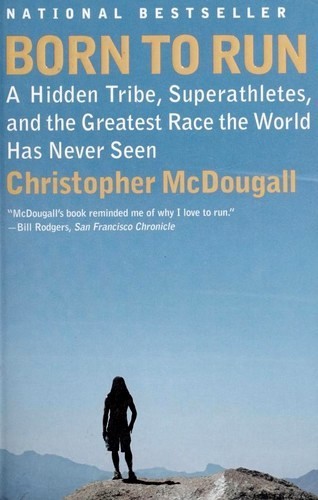
Born to Run begins as a personal injury investigation. Christopher McDougall, a journalist and recreational runner, keeps getting hurt despite following conventional training advice, so he sets out to find the Tarahumara, a reclusive tribe in Mexico's Copper Canyon who routinely run hundred-mile distances in sandals made from tire rubber and appear to do it without injury. What starts as a magazine assignment becomes a two-year obsession that leads him through barefoot running science, evolutionary biology, and the subculture of American ultramarathons.
The book's central argument, drawn partly from Harvard biologist Daniel Lieberman's research, is that humans evolved as persistence hunters — we are uniquely built for long-distance running in ways most modern runners undermine with cushioned shoes. McDougall contends that thick-soled running shoes encourage heel striking, which sends impact forces up the leg on every stride, while barefoot or minimally shod runners tend to land on the midfoot and forefoot, absorbing impact through muscle and tendon rather than bone and cartilage. The implication is uncomfortable for the $3 billion running-shoe industry: the technology sold as injury prevention may be part of the injury problem.
The narrative unfolds around a climactic race McDougall helps organize in the Copper Canyon, pitting a group of elite American ultrarunners — including the eccentric Caballo Blanco, who had been living among the Tarahumara for years — against the tribe's best runners. The cast of Americans includes Ann Trason, Scott Jurek, and a handful of other figures from the cult world of 100-mile races. McDougall writes them with energy and specificity, and the canyon race itself, when it finally arrives, is genuinely suspenseful. The Tarahumara sections give the book an anthropological texture that separates it from typical sports narrative.
The science is real but selectively presented. Lieberman's persistence-hunting research is solid; the blanket case against running shoes has been more contested since the book's publication, with subsequent studies producing mixed results on barefoot running injury rates. McDougall is a journalist, not a researcher, and he argues with the enthusiasm of a convert. Readers looking for a comprehensive review of the biomechanics literature will be disappointed. But as a piece of adventure journalism that happens to reframe how millions of people think about running, it is hard to argue with the results. The book inspired a wave of minimalist running and sold a more important idea alongside it: that running is not punishment, and that joy and speed are not opposites.
The big ideas
- 1.
Humans evolved as persistence hunters: our anatomy — upright posture, Achilles tendons, gluteus maximus, sweat glands — is specifically adapted for long-distance running, not sprinting.
- 2.
Heel striking, encouraged by thick-soled running shoes, generates impact forces that travel straight up the skeleton. Midfoot and forefoot landing, typical of unshod runners, routes that force through muscle and tendon.
- 3.
The Tarahumara of Mexico's Copper Canyon run hundred-mile distances through old age on minimal footwear and a diet centered on corn and chia, with low rates of the chronic injuries that plague Western recreational runners.
