Talk to Co-Active Coaching like its author wrote you back.
Get the ideas that fit your life — not generic summaries.
- Chat with the book
- Audiobook-style main ideas
- Adapts to your life and goals
- Helps you take action
What it argues
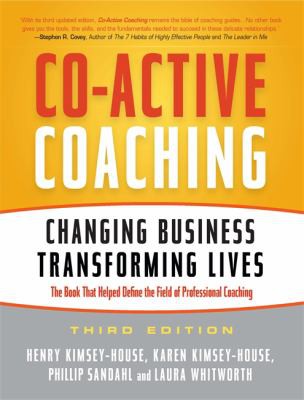
Co-Active Coaching presents the model developed at the Coaches Training Institute (CTI), which has trained more professional coaches than any other organization in the world. The core premise is that coaching is not advice-giving, mentoring, or consulting. It is a collaborative relationship — "co-active" means both coach and client are fully engaged and the client is treated as naturally creative, resourceful, and whole — in which the coach's job is to help the client access their own answers rather than providing them.
The model rests on four cornerstones: the client is naturally creative, resourceful, and whole; coaching addresses the client's whole life, not just their presenting problem; the agenda comes from the client; and the relationship calls for full engagement from both parties. These cornerstones shape everything that follows — the way coaches listen, the questions they ask, the way they handle emotions and silence, and how they challenge clients who are settling for less than they're capable of.
What it gets right
- 1.
The client is naturally creative, resourceful, and whole — the coach's job is to help them access their own wisdom, not to provide answers.
- 2.
Co-active coaching addresses the client's whole life, not just the topic they bring to the session. The presenting problem is often not the real issue.
- 3.
The three levels of listening — attending to words, reading the emotional field, and attending to the systemic whole — represent a progressively deeper quality of attention.
What it covers
Who wrote it
Henry Kimsey-House and Karen Kimsey-House are co-founders of the Coaches Training Institute (CTI), the organization that created the co-active coaching model and trained more credentialed coaches than any other institution worldwide. Phillip Sandahl co-authored the first edition and has contributed to the model's development through his own coaching and leadership work. Laura Whitworth, who co-authored the original 1998 edition, was a pioneering figure in the professional coaching field before her death in 2007. Together they established co-active coaching as one of the most widely taught coaching methodologies in the world.
