Talk to Co-Active Coaching like its author wrote you back.
Get the ideas that fit your life — not generic summaries.
- Chat with the book
- Audiobook-style main ideas
- Adapts to your life and goals
- Helps you take action
Co-Active Coaching, in detail
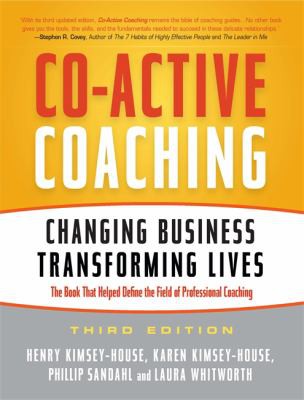
Co-Active Coaching presents the model developed at the Coaches Training Institute (CTI), which has trained more professional coaches than any other organization in the world. The core premise is that coaching is not advice-giving, mentoring, or consulting. It is a collaborative relationship — "co-active" means both coach and client are fully engaged and the client is treated as naturally creative, resourceful, and whole — in which the coach's job is to help the client access their own answers rather than providing them.
The model rests on four cornerstones: the client is naturally creative, resourceful, and whole; coaching addresses the client's whole life, not just their presenting problem; the agenda comes from the client; and the relationship calls for full engagement from both parties. These cornerstones shape everything that follows — the way coaches listen, the questions they ask, the way they handle emotions and silence, and how they challenge clients who are settling for less than they're capable of.
The book covers the practical mechanics of coaching conversations in considerable depth: the three levels of listening (attending to the client's words, reading the emotional and energetic field, attending to the systemic whole), the concept of "forwarding and deepening" (moving the client both into action and into greater self-knowledge), how to work with values and saboteurs, and how to manage the balance between support and challenge. Each chapter includes exercises and sample dialogues that illustrate the techniques in context.
The book has gone through multiple editions and remains the primary text for CTI's coach training program. Its influence extends well beyond professional coaching into management, HR, and organizational development. Readers who approach it expecting a quick read will find the model requires practice to internalize. But for anyone who works with people in a coaching, management, or helping role, the framework for listening and asking questions at depth is genuinely distinct from what most people do in conversation, and developing that skill changes how they work.
The big ideas
- 1.
The client is naturally creative, resourceful, and whole — the coach's job is to help them access their own wisdom, not to provide answers.
- 2.
Co-active coaching addresses the client's whole life, not just the topic they bring to the session. The presenting problem is often not the real issue.
- 3.
The three levels of listening — attending to words, reading the emotional field, and attending to the systemic whole — represent a progressively deeper quality of attention.
