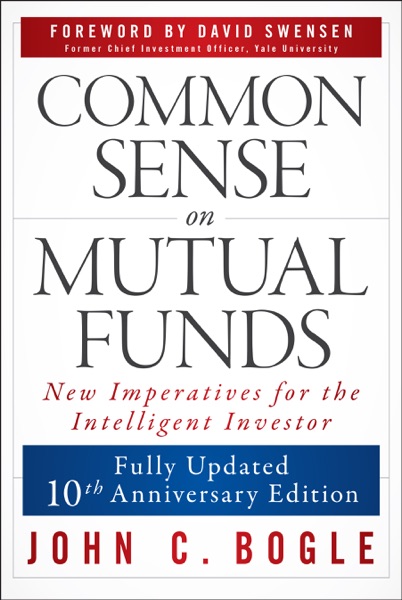
Talk to Common Sense on Mutual Funds like its author wrote you back.
Get the ideas that fit your life — not generic summaries.
- Chat with the book
- Audiobook-style main ideas
- Adapts to your life and goals
- Helps you take action
Common Sense on Mutual Funds, in detail
John Bogle, the founder of Vanguard and inventor of the retail index fund, wrote Common Sense on Mutual Funds as a comprehensive argument for why most investors should own index funds rather than actively managed funds. Published in 1999, during the height of the dot-com boom, it ran against the prevailing sentiment that active managers were generating exceptional returns. Bogle's case was arithmetic before it was polemical: after costs, active management as a whole must underperform the market, because the market's return is what all participants together earn, and active management charges significantly more.
The core argument is the relentless compounding of costs. Bogle demonstrates with detailed historical data that the average actively managed mutual fund charges expenses, sales loads, portfolio turnover costs, and tax inefficiencies that together consume two to three percentage points of return annually. Over a twenty or thirty-year investing horizon, this gap becomes catastrophic. A dollar invested in the market over thirty years at 7% annual return becomes roughly $7.60. The same dollar after 2% in annual costs yields about $4.30. The difference — $3.30 per original dollar — is lost to the financial industry in fees and transaction costs.
Beyond the cost argument, Bogle examines the evidence on whether active fund managers actually add value — whether any of them beat the market consistently enough to justify their costs. His review of the data is thorough and finds that while some managers do outperform in any given period, persistent outperformance over time is no more common than would be predicted by chance. The funds that perform best over a decade are rarely the same ones that perform best in the next decade. Selecting a manager in advance who will consistently outperform is, for practical purposes, impossible.
The later sections of the book address asset allocation, bond funds, fund selection, and the duties of fund managers to their investors — what Bogle calls fiduciary duty. These chapters are dense but careful. Bogle is explicit that the mutual fund industry has consistently prioritized its own profits over its investors' returns, and he uses Vanguard's structure (owned by its funds, which are owned by investors) as the only model that genuinely aligns interests. The book is long and sometimes repetitive, but the quantitative argument is made with unusual rigor and the historical data is extensive.
The big ideas
- 1.
Cost is the primary determinant of long-term fund performance. Every percentage point of annual expense destroys a significant fraction of terminal wealth over decades.
- 2.
Actively managed funds as a group must underperform the market index after costs, because the market's return is what all participants earn in aggregate, minus their collective costs.
- 3.
Past performance does not predict future fund performance. Top-performing funds in any decade are generally not the same as top-performing funds in the next decade.
