Talk to Confessions like its author wrote you back.
Get the ideas that fit your life — not generic summaries.
- Chat with the book
- Audiobook-style main ideas
- Adapts to your life and goals
- Helps you take action
What it argues
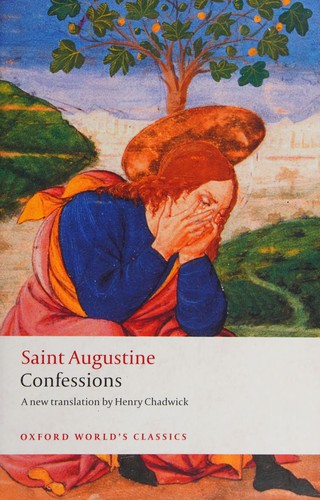
Confessions, written around 397 CE, is the spiritual autobiography of Augustine of Hippo and one of the most influential texts in Western philosophy and Christian theology. Augustine addresses the book directly to God — it is structured as an extended prayer — moving from a detailed account of his own restlessness, sin, and intellectual wandering through his dramatic conversion to Christianity, then into a series of philosophical meditations on memory, time, and creation. The combination of intense personal confession and rigorous philosophical speculation is distinctive in all of ancient literature.
The early books trace Augustine's childhood in North Africa, his education in rhetoric at Carthage, his involvement with the Manichaean sect, his years of sexual license and professional ambition, and his move to Rome and Milan. The famous phrase "our heart is restless until it rests in thee" appears in the opening paragraph and functions as the thesis of the whole: Augustine reads his own history as evidence that all human desire is ultimately a displaced desire for God. The pear-tree episode — in which a young Augustine steals pears not because he is hungry but simply for the sake of transgression — becomes one of the most analyzed passages in the history of Christian ethics.
What it gets right
- 1.
Augustine's thesis is that human restlessness — intellectual, moral, erotic — is ultimately a displaced longing for God: 'our heart is restless until it rests in thee.'
- 2.
The pear-tree theft is Augustine's case study in radical evil: he stole not for need but for transgression itself, revealing a will that can choose against its own good.
- 3.
Augustine treats his Manichaean years as evidence that intellectual sophistication is no protection against false belief. He was well-educated and wrong for a decade.
What it covers
Who wrote it
Augustine of Hippo (354–430 CE) was a bishop, theologian, and philosopher born in North Africa in what is now Algeria. His two most influential works are the Confessions and The City of God. Augustine's synthesis of Platonic philosophy and Christian doctrine shaped Western Christianity profoundly, and his thinking on original sin, grace, free will, and the nature of time continued to be debated through the Reformation and beyond. He was made a Doctor of the Church and is considered one of the most significant thinkers in the history of Western thought.
