Confessions by Saint Augustine is a 1909 philosophy book about conversion, memory, divine love. Augustine's thesis is that human restlessness — intellectual, moral, erotic — is ultimately a displaced longing for God: 'our heart is restless until it rests in thee.'
Summary
Confessions, written around 397 CE, is the spiritual autobiography of Augustine of Hippo and one of the most influential texts in Western philosophy and Christian theology. Augustine addresses the book directly to God — it is structured as an extended prayer — moving from a detailed account of his own restlessness, sin, and intellectual wandering through his dramatic conversion to Christianity, then into a series of philosophical meditations on memory, time, and creation. The combination of intense personal confession and rigorous philosophical speculation is distinctive in all of ancient literature.
The early books trace Augustine's childhood in North Africa, his education in rhetoric at Carthage, his involvement with the Manichaean sect, his years of sexual license and professional ambition, and his move to Rome and Milan. The famous phrase "our heart is restless until it rests in thee" appears in the opening paragraph and functions as the thesis of the whole: Augustine reads his own history as evidence that all human desire is ultimately a displaced desire for God. The pear-tree episode — in which a young Augustine steals pears not because he is hungry but simply for the sake of transgression — becomes one of the most analyzed passages in the history of Christian ethics.
The conversion itself arrives in Book 8, in a garden in Milan, when Augustine hears a child's voice saying "take up and read," opens Paul's letter to the Romans, and experiences an immediate shift. Book 9 records his baptism and the death of his mother Monica, in one of antiquity's most tender scenes. Books 10 through 13 shift away from autobiography into philosophy: Augustine meditates on the nature of memory, the experience of time (arguing that the past and future exist only in the mind), and the meaning of Genesis 1.
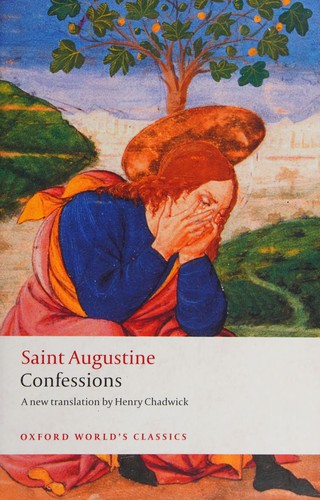
The Confessions is often assigned as a document of Christian thought, but its account of consciousness, memory, and the divided will has influenced secular thinkers from Petrarch to Wittgenstein. Reading it today, the most striking quality is the candor — Augustine writes about intellectual pride, sexual compulsion, and the gap between knowing what is right and willing it with a specificity that still feels modern. The translation matters enormously; the Oxford World's Classics edition by Henry Chadwick is widely regarded as the best in English.
Talk to Confessions like its author wrote you back.
Get the ideas that fit your life — not generic summaries.
- Chat with the book
- Audiobook-style main ideas
- Adapts to your life and goals
- Helps you take action
Key takeaways
- 1.
Augustine's thesis is that human restlessness — intellectual, moral, erotic — is ultimately a displaced longing for God: 'our heart is restless until it rests in thee.'
- 2.
The pear-tree theft is Augustine's case study in radical evil: he stole not for need but for transgression itself, revealing a will that can choose against its own good.
- 3.
Augustine treats his Manichaean years as evidence that intellectual sophistication is no protection against false belief. He was well-educated and wrong for a decade.
- 4.
Conversion, in Augustine's account, is not a single moment of reason but a collapse of the will's resistance after a long preparation. The garden scene is sudden but the work behind it was years long.
- 5.
On memory: Augustine argues that memory is not just a store of past events but the ground of identity. We find God in the depths of memory, not outside ourselves.
- 6.
On time: the past exists as memory, the future as expectation, and the present as attention. There is no objective past or future — only the mind's modes of holding them.
- 7.
Monica, Augustine's mother, is one of the great supporting figures in Western autobiography — persistent, prayerful, and ultimately vindicated in a way that shapes how Augustine reads providence.
- 8.
The Confessions argues that the will is not simply rational: a person can know what is right and will the opposite. This anticipates modern accounts of akrasia (weakness of will) by fifteen centuries.
Discussion questions
Use these on your own, with a book club, or as chat starters in Superbook. Book club version, ready to copy or print →
- 1.
Augustine reads his entire early life as a misdirected search for something he couldn't name. Looking back at your own history, is there a pattern in what you have sought — and what it might have been aiming at?
- 2.
The pear-tree theft: Augustine steals purely for the act of stealing. Does the idea of evil for its own sake — transgression without any gain — resonate with anything in human behavior you've observed?
- 3.
Augustine spent years as a Manichaean before deciding it was wrong. What does his experience suggest about the relationship between intelligence and belief?
- 4.
The conversion comes after years of knowing intellectually but not being able to will the change. Have you experienced the gap between knowing what you should do and being able to actually do it? What closed that gap, if it closed?
- 5.
Augustine's mother Monica prays for him for more than a decade. What does his treatment of her suggest about the relationship between persistence, love, and influence?
- 6.
Books 10–13 pivot from autobiography to philosophy. Does the shift feel like the same book — or does Augustine's project change in a way that disrupts the narrative?
- 7.
Augustine's account of time — that past and future only exist as mental states — is still philosophically contested. Does it match your experience of how time feels from the inside?
- 8.
The Confessions is addressed to God rather than a human reader. How does that rhetorical choice change what Augustine can say, and how you receive it?
- 9.
Augustine writes with intense self-criticism but also with retrospective confidence that everything was heading somewhere. Is that combination honest — or does conversion change the story too conveniently?
- 10.
Which passages in the Confessions felt most contemporary — as if Augustine could have been writing now rather than in the late fourth century?
- 11.
Augustine treats intellectual pride as his deepest sin, more dangerous than sexual sin. Do you think that ordering is right?
- 12.
What would an honest modern confessions — written in the spirit of Augustine but without the religious framework — look like? What would it have to include?
Themes
Frequently asked questions
-
What is the Confessions by Augustine actually about?
It's a spiritual autobiography addressed to God, covering Augustine's youth, his years of philosophical wandering and moral struggle, his dramatic conversion to Christianity, and the death of his mother. The later books are philosophical meditations on memory, time, and creation.
-
Is the Confessions difficult to read?
The prose is dense in places, especially the philosophical books at the end. The autobiographical narrative (Books 1–9) is more accessible and widely considered the most gripping section. A good modern translation makes an enormous difference — the Chadwick translation (Oxford) is highly recommended.
-
How long does it take to read the Confessions?
Around seven to eight hours for the full text. Many readers read Books 1–9 first and treat Books 10–13 separately, since they shift significantly in mode.
-
Do you need to be Christian to appreciate the Confessions?
No. The account of restlessness, intellectual searching, and the divided will resonates independently. Augustine's observations about memory and time are philosophically significant regardless of theology. But the book's emotional force is inseparable from his faith, so some of it will feel differently weighted to non-religious readers.
-
What is the most famous line in the Confessions?
The opening: 'Thou madest us for Thyself, and our heart is restless, until it repose in Thee.' It is the thesis and the emotional core of the entire book.