Talk to Dare to Lead like its author wrote you back.
Get the ideas that fit your life — not generic summaries.
- Chat with the book
- Audiobook-style main ideas
- Adapts to your life and goals
- Helps you take action
Dare to Lead, in detail
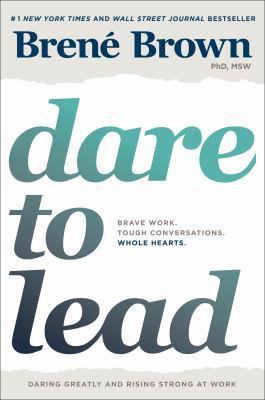
Dare to Lead is Brené Brown's application of her research on vulnerability and courage to the specific context of leadership. Based on interviews with over 150 executives, it argues that daring leadership is not about having all the answers but about the willingness to be uncertain, to give and receive honest feedback, and to create conditions where people can bring their full selves to work without fear.
The book is organized around four "skill sets of courage": rumbling with vulnerability (sitting with discomfort rather than armoring up), living into values rather than just professing them, building trust through specific behaviors (not just through sentiment), and learning to rise from failure without armor. Brown is particularly detailed on what she calls the BRAVING inventory — a set of seven behaviors that constitute trust: Boundaries, Reliability, Accountability, Vault (confidentiality), Integrity, Non-judgment, and Generosity.
Brown pushes back against the idea that workplaces should be purely rational spaces where emotion is checked at the door. She argues that suppressing vulnerability doesn't eliminate it — it converts it into armor, and armor is the thing that makes people unavailable for genuine collaboration, honest feedback, and creative risk. Leaders who armor up teach their teams to armor up, and armored teams don't do great work.
The book is at its best when Brown is concrete — the distinction between values as words on a wall and values as actual decision-making criteria, the BRAVING inventory applied to specific management behaviors, the "square squad" concept of seeking feedback only from those who are also in the arena. It's at its weakest when the language becomes therapeutic without adding precision. Still, it addresses something most management books avoid: the emotional substrate beneath every leadership decision.
The big ideas
- 1.
Daring leadership requires the willingness to be uncertain, ask for help, and show up without all the answers — behaviors that most organizational cultures still punish despite claiming otherwise.
- 2.
Armor — perfectionism, cynicism, intellectualizing — doesn't protect leaders; it disconnects them from the teams and problems they're trying to lead.
- 3.
The BRAVING inventory identifies seven trust-building behaviors: Boundaries, Reliability, Accountability, Vault, Integrity, Non-judgment, and Generosity. Trust is built through consistent small actions, not through declarations.
